Quick Answer
A transit ambassador is a trained frontline support role that helps riders navigate the system, understand service changes, resolve basic questions, and feel more confident using public transportation. Agencies invest in ambassador programs because they create a visible human layer between operations and the public, supporting rider experience, communication, safety awareness, and trust.
The Role Is Simple to Understand but Powerful in Practice
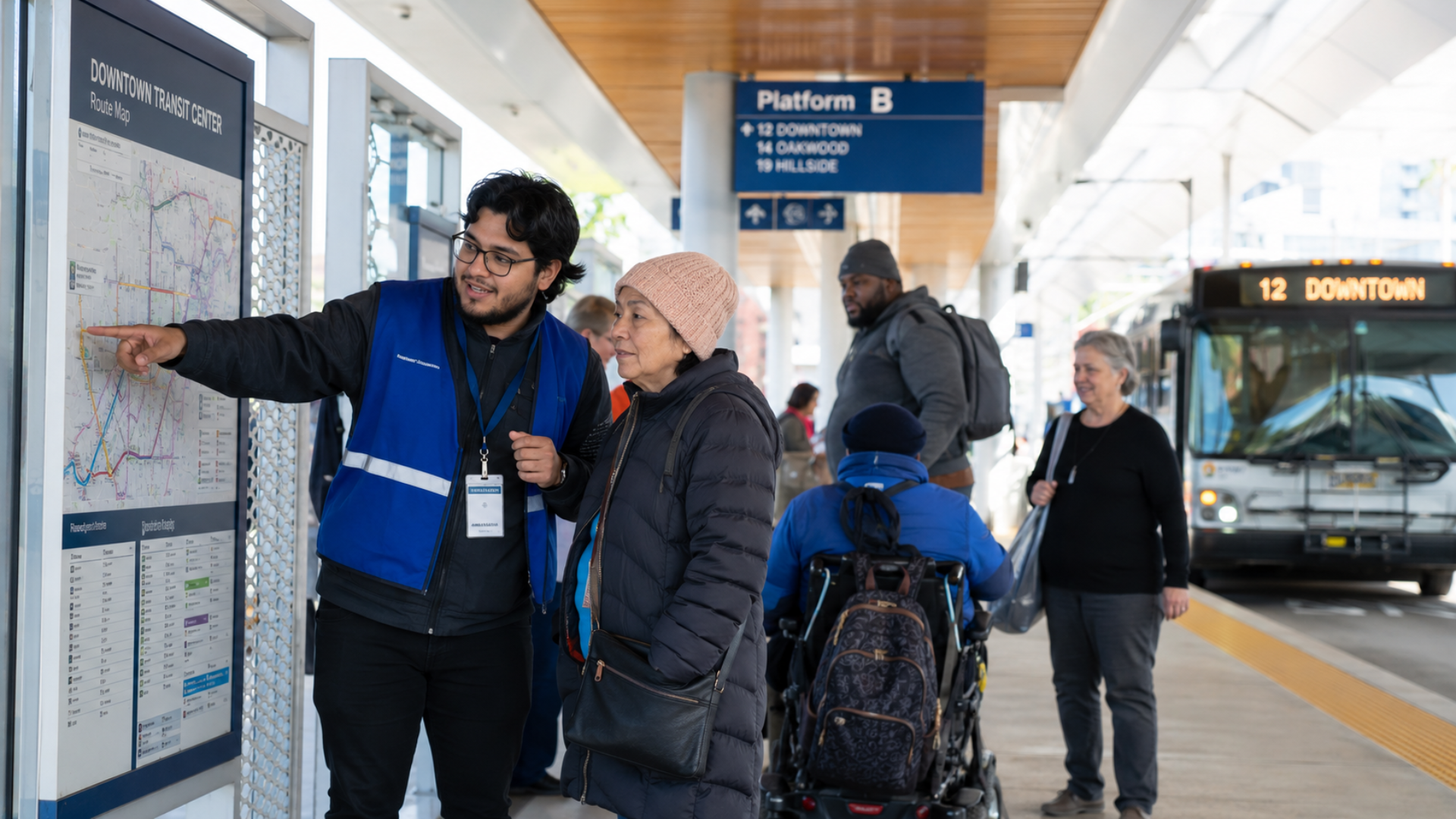
Transit ambassadors are often the first helpful faces riders see when something feels confusing, stressful, or unfamiliar.
They may:
- Answer route questions
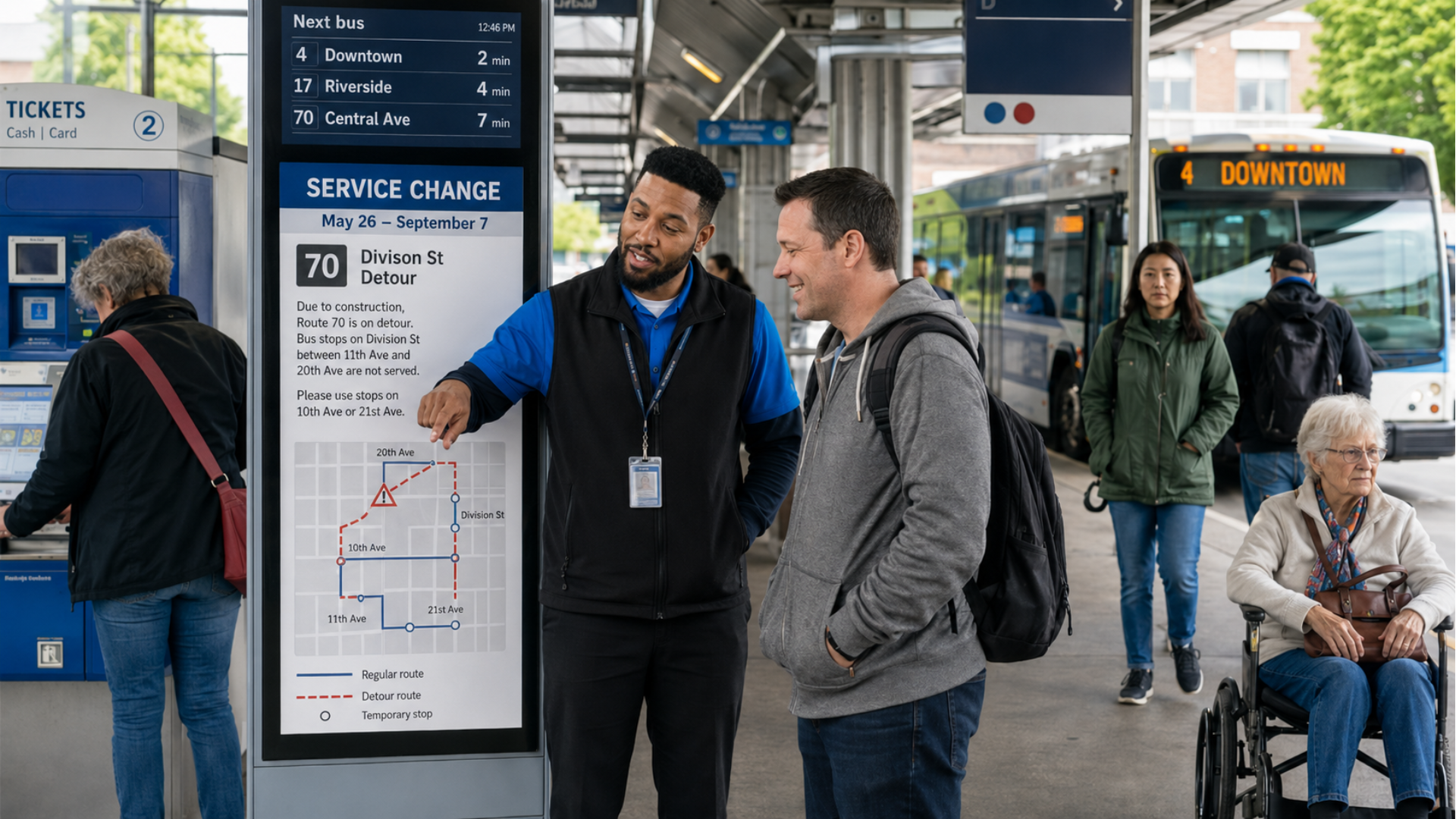
- Guide passengers during service changes
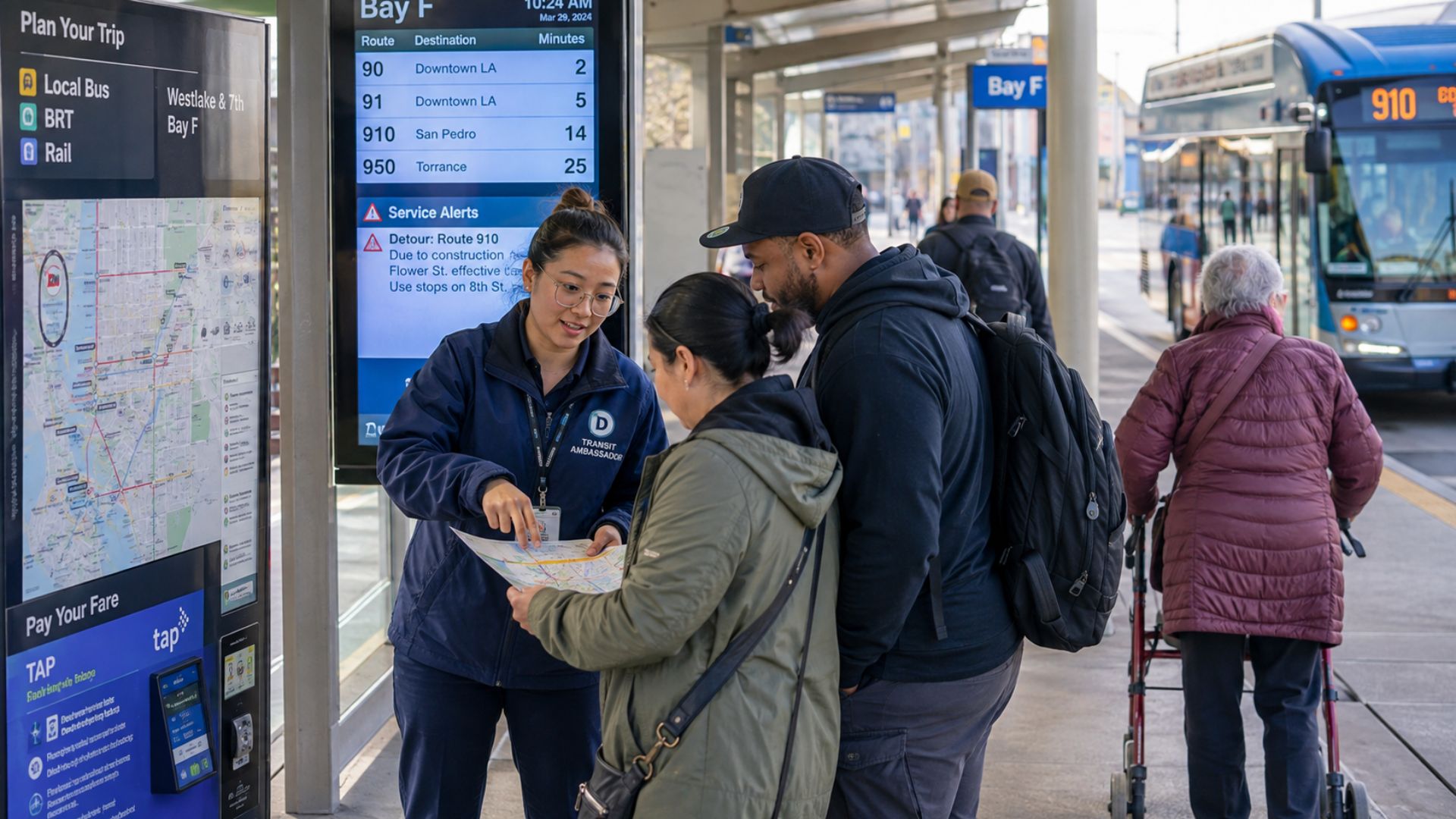
- Support wayfinding
- Provide information during events
- Explain fare or boarding procedures
- Assist riders with accessibility needs
- Help calm a tense interaction before it becomes a complaint
The value is not only in the task itself. The value is in making the transit system feel more approachable during the moments when riders need clarity most.
For agencies, that matters because public transportation is both an operational service and a public experience. A bus, rail line, station, transfer point, or detour may be technically functional, but the experience can still create frustration when riders feel confused, unheard, or unsupported.
Transit ambassadors help close that gap by connecting agency operations with real-time rider communication.
Understanding why rider experience matters in public transportation can help agencies see how communication, accessibility, safety perception, and human support shape public confidence in the system.
Why Agencies Are Investing in Ambassador Programs Now
Agencies are managing a complex mix of expectations involving:
- Service reliability
- Safety perception
- Accessibility
- Workforce pressure
- Customer complaints
- Technology changes
- Public trust
- Changing rider expectations
Traditional customer service channels remain important, but they often respond after the rider has already experienced a problem. Transit ambassadors provide assistance earlier and closer to the point of need.
This support can be especially valuable during:
- Schedule changes
- Major events
- Construction disruptions
- Station updates
- Fare education campaigns
- New technology rollouts
- Temporary boarding changes
- Accessibility-related situations
When agencies add trained ambassadors, they create a flexible frontline support layer that can be deployed where rider confusion or concern is most likely to occur.
The Federal Transit Administration Workforce Development Initiative provides resources to help public transit agencies recruit, retain, train, reskill, and upskill the workforce needed to meet changing operational and service demands.
Agencies considering a broader workforce strategy can also explore available transit training programs for frontline operations, customer service, de-escalation, planning, scheduling, specialized transit, and emerging technologies.
What Transit Ambassadors Actually Do
A strong ambassador program is not simply a group of people handing out information. It is a trained, coordinated support model.
Transit ambassadors can:
- Provide wayfinding assistance
- Share current service information
- Answer basic trip-planning questions
- Support riders with accessibility needs
- Communicate agency updates
- Explain temporary service changes
- Document rider feedback
- Identify recurring points of confusion
- Direct issues to the appropriate resource
- Support conflict prevention through calm communication
In some environments, ambassadors may also use de-escalation techniques to help prevent frustration from developing into a more disruptive interaction.
Transit-specific customer service training can prepare ambassadors and other frontline employees to communicate professionally, manage rider feedback, address common conflict points, and deliver more consistent passenger support.
The strongest programs make the ambassador’s role clear. Ambassadors should understand:
- What they are responsible for
- What falls outside their role
- When an issue must be escalated
- Who should receive that escalation
- How rider interactions should be documented
- How to represent the agency’s values in public-facing situations
Transit Ambassadors Are Not Security Officers
Transit ambassadors and security officers serve different purposes.
Ambassadors generally focus on:
- Customer support
- Communication
- Wayfinding
- Education
- Rider assistance
- Conflict prevention
- Connecting riders with appropriate resources
Security personnel operate within a different authority structure and may be responsible for enforcing laws, responding to threats, managing security incidents, or coordinating emergency intervention.
A successful ambassador program clearly defines these boundaries. Ambassadors should not be expected to manage situations that require law enforcement, emergency response, security intervention, or specialized behavioral health support.
However, ambassadors can contribute to a safer environment by recognizing concerns early, communicating calmly, and following defined escalation procedures.
The FTA De-Escalation Training Resource Directory recognizes de-escalation as one component of a broader Safety Management System and provides resources that agencies can use when developing or updating their training programs.
The Operational Value Behind the Human Interaction
At first glance, an ambassador program may appear to be primarily a customer service investment. In practice, it can support broader operational goals.
Better communication can reduce repeat questions. More visible assistance can improve rider confidence during disruptions. Clearer guidance can help passengers move through stations, transfer points, and temporary boarding areas more smoothly.
A friendly, trained presence can also reduce the emotional intensity of certain interactions before they become formal complaints.
Ambassadors may help agencies:
- Reduce avoidable rider confusion
- Support operators during disruptions
- Improve the consistency of service information
- Identify recurring communication gaps
- Collect frontline rider feedback
- Strengthen accessibility support
- Improve public trust
- Protect the rider relationship during service changes
Agencies experiencing recurring complaints can learn more about reducing transit customer complaints through frontline support.
For leaders, the real question is not whether ambassadors are simply nice to have. The strategic question is where trained human support could reduce friction, strengthen communication, and improve the rider experience across the system.
A Calm Presence Can Help Prevent Escalation
A route question, fare misunderstanding, missed connection, or service disruption can become more difficult when riders feel ignored or cannot find reliable information.
Trained ambassadors can intervene early by:
- Acknowledging the rider’s concern
- Explaining available options
- Providing clear next steps
- Reinforcing agency expectations respectfully
- Directing the rider to the appropriate resource
- Requesting additional support when necessary
Transit-specific de-escalation training can help frontline employees recognize early warning signs, communicate effectively under pressure, assess risk, and disengage safely.
The APTA Transit De-Escalation Policy and Training Recommended Practice provides policy and training recommendations intended to support transit workers in de-escalating fare disputes and other confrontations while creating a safer work environment.
De-escalation does not mean ambassadors should resolve every situation themselves. It means they have practical tools for managing communication while staying within their role and following agency protocols.
What Makes an Ambassador Program Successful
Successful programs require more than staffing. They need structure, preparation, and coordination.
Clear Role Definition
Agencies should define what ambassadors can address independently, what requires escalation, and how the role interacts with operators, supervisors, customer service teams, safety personnel, and security partners.
Transit-Specific Training
Training should reflect the real conditions ambassadors encounter, including service disruptions, fare questions, accessibility needs, rider frustration, crowded environments, and rapidly changing information.
Deployment Planning
Agencies should identify where ambassadors can provide the greatest value, such as:
- Busy stations
- Transfer points
- Event locations
- Service-disruption zones
- Accessibility touchpoints
- Locations with recurring rider complaints
- Areas affected by fare or technology changes
Communication Protocols
Ambassadors need access to accurate, current information and a clear process for receiving operational updates.
Defined Escalation Paths
Employees should know when and how to involve supervisors, operations, safety personnel, security teams, emergency responders, or other specialized resources.
Feedback Loops
Ambassadors should have a consistent way to share field observations, recurring questions, accessibility barriers, and complaint triggers with agency leadership.
Ambassadors Can Become an Agency Listening Post
The feedback role is often overlooked.
Ambassadors interact directly with riders in the locations where confusion occurs. They may identify patterns that do not appear clearly in formal complaint systems, surveys, or operational reports.
Examples may include:
- A sign that riders repeatedly misunderstand
- A transfer point that causes frequent confusion
- A fare policy that is difficult to explain
- An accessibility barrier riders encounter repeatedly
- A service update that is not reaching the public
- A location where passengers consistently need wayfinding help
These observations can become useful operational insights when agencies create a structured process for collecting, categorizing, and reviewing them.
Ambassadors can therefore help agencies move from reacting to individual complaints toward improving the systems and communications that created the problem.
Training Should Be Built for Transit, Not Generic Customer Service
Transit employees work in public-facing, mobile, operationally complex, and safety-sensitive environments.
Generic customer service courses may not fully address:
- Fare disputes
- Service interruptions
- Missed transfers
- Accessibility procedures
- Passenger distress
- Crowded stations or vehicles
- Conflicting operational priorities
- Situations requiring disengagement or escalation
The Transit Ambassador model uses transit-specific scenarios and a train-the-trainer structure that helps agencies build internal training capacity.
The Metra frontline transit training case study demonstrates how the program was used to provide employees with practical tools aligned with the realities of their work. More than 430 Metra employees completed the training, with participants reporting stronger communication awareness, customer perspective, situational awareness, and confidence in applying program principles.
What This Means for Transit Agencies
For transit leaders, the takeaway is clear: rider experience, workforce support, communication, safety awareness, and public trust are connected.
When agencies invest in practical frontline support, they are not only improving individual interactions. They are building a stronger foundation for:
- Service quality
- Rider confidence
- Workforce preparedness
- Complaint prevention
- Accessibility
- Agency reputation
- Operational communication
- Long-term confidence in public transportation
Transit ambassadors cannot solve every operational or safety challenge. Their value lies in providing trained, visible, and coordinated human support at the points where riders are most likely to need guidance.
Frequently Asked Questions
What is the main purpose of a transit ambassador?
The main purpose of a transit ambassador is to provide visible, trained human support that helps riders navigate the system, understand service information, and feel more confident using public transportation.
Are transit ambassadors the same as security officers?
No. Transit ambassadors generally focus on customer support, communication, wayfinding, education, and rider assistance. Security teams have different responsibilities, authority, protocols, and training requirements.
When should an agency consider a transit ambassador program?
Agencies should consider ambassador support when they are experiencing rider confusion, service-change challenges, customer complaints, accessibility concerns, public trust issues, or pressure on operators and other frontline teams.
What training do transit ambassadors need?
Transit ambassadors may need training in customer service, agency procedures, wayfinding, accessibility awareness, service communication, conflict prevention, de-escalation, situational awareness, documentation, and escalation protocols.
Where should transit ambassadors be deployed?
Ambassadors can be particularly useful at busy stations, transfer points, service-disruption areas, special events, accessibility touchpoints, temporary boarding locations, and places where riders frequently request help.
Can transit ambassadors reduce customer complaints?
Transit ambassadors can help reduce avoidable complaints by addressing questions earlier, communicating service changes clearly, assisting riders during stressful moments, and documenting recurring sources of confusion.
Explore a Frontline Support Model for Your Agency
If your agency is exploring ways to make the rider experience clearer, calmer, and more human, Transit Ambassador can help assess what the right frontline training and support model could look like.
Contact the Transit Ambassador team to discuss customer service training, de-escalation, train-the-trainer delivery, course pricing, and program customization.