Quick Answer
Customer service training should be part of transit agency strategy because every public-facing interaction affects rider experience, trust, complaints, and service perception. Training helps frontline teams communicate clearly, respond consistently, set expectations, and guide riders through routine and stressful moments.
Customer service is part of service delivery
In public transportation, customer service is not separate from operations. It happens at fare points, stops, stations, vehicles, call centers, events, and disruption zones. Riders experience the agency through every interaction they have with people, signs, alerts, and systems.
When customer service is treated as a strategic function, agencies can create more consistent experiences. When it is treated as an afterthought, riders may receive uneven information and frontline teams may feel unsupported.
The National RTAP guide to communicating with the public offers practical guidance on rider information, communication channels, and accessibility considerations.
Training creates a shared standard
Good customer service depends on more than personality. It requires shared expectations, clear language, role clarity, and practical tools. Training helps employees understand how to communicate agency information, respond to frustration, support accessibility needs, and know when to escalate an issue.
This is especially important in large or complex systems where many teams interact with riders. A shared standard helps the agency sound and feel more consistent across locations and roles.
Agencies can use the U.S. Department of Transportation’s Plain Language Checklist as a reference when reviewing the clarity of written rider communications and training materials.
Customer service training supports complaint prevention
Many complaints come from communication breakdowns: unclear answers, inconsistent guidance, dismissive tone, or lack of follow-up. Training can help frontline teams respond in ways that reduce friction. That does not mean employees must absorb unreasonable behavior. It means they need tools for setting boundaries while still communicating respectfully.
Understanding how frontline support can help reduce transit customer complaints can help agencies connect training priorities with recurring rider concerns.
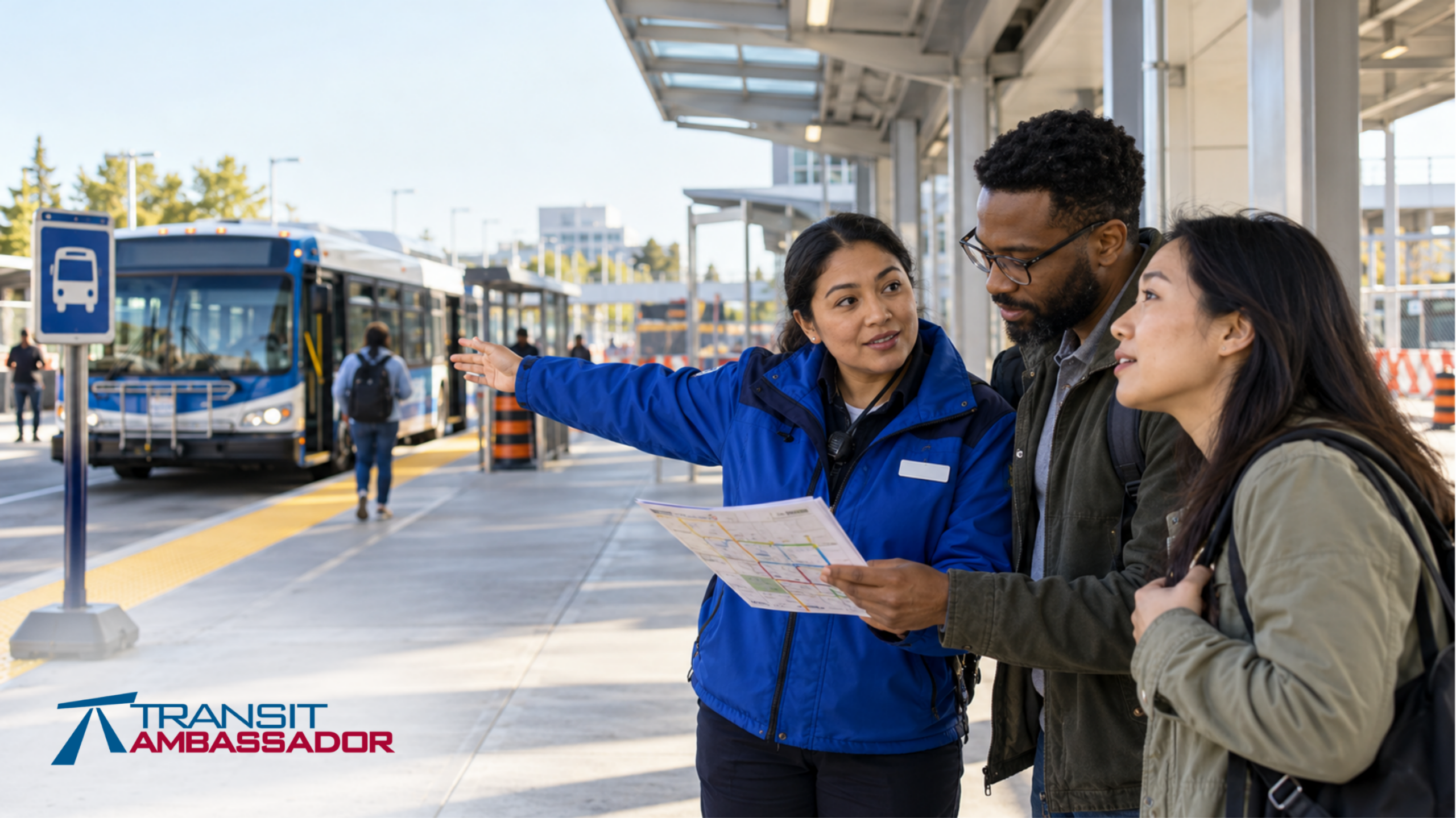
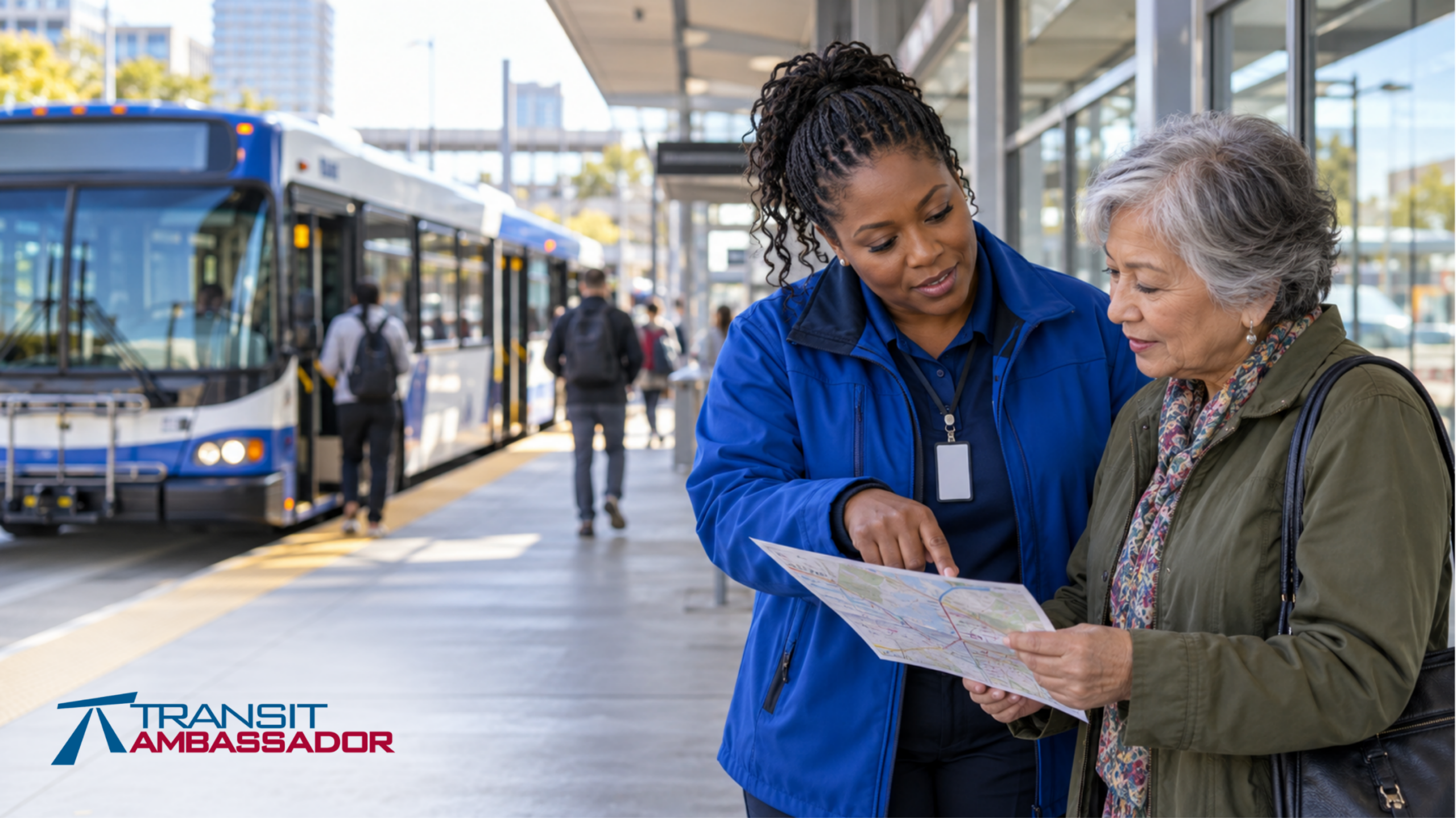
Transit ambassadors can extend this customer service standard into the field by providing a trained support role focused specifically on rider communication and assistance.
Training should reflect real transit scenarios
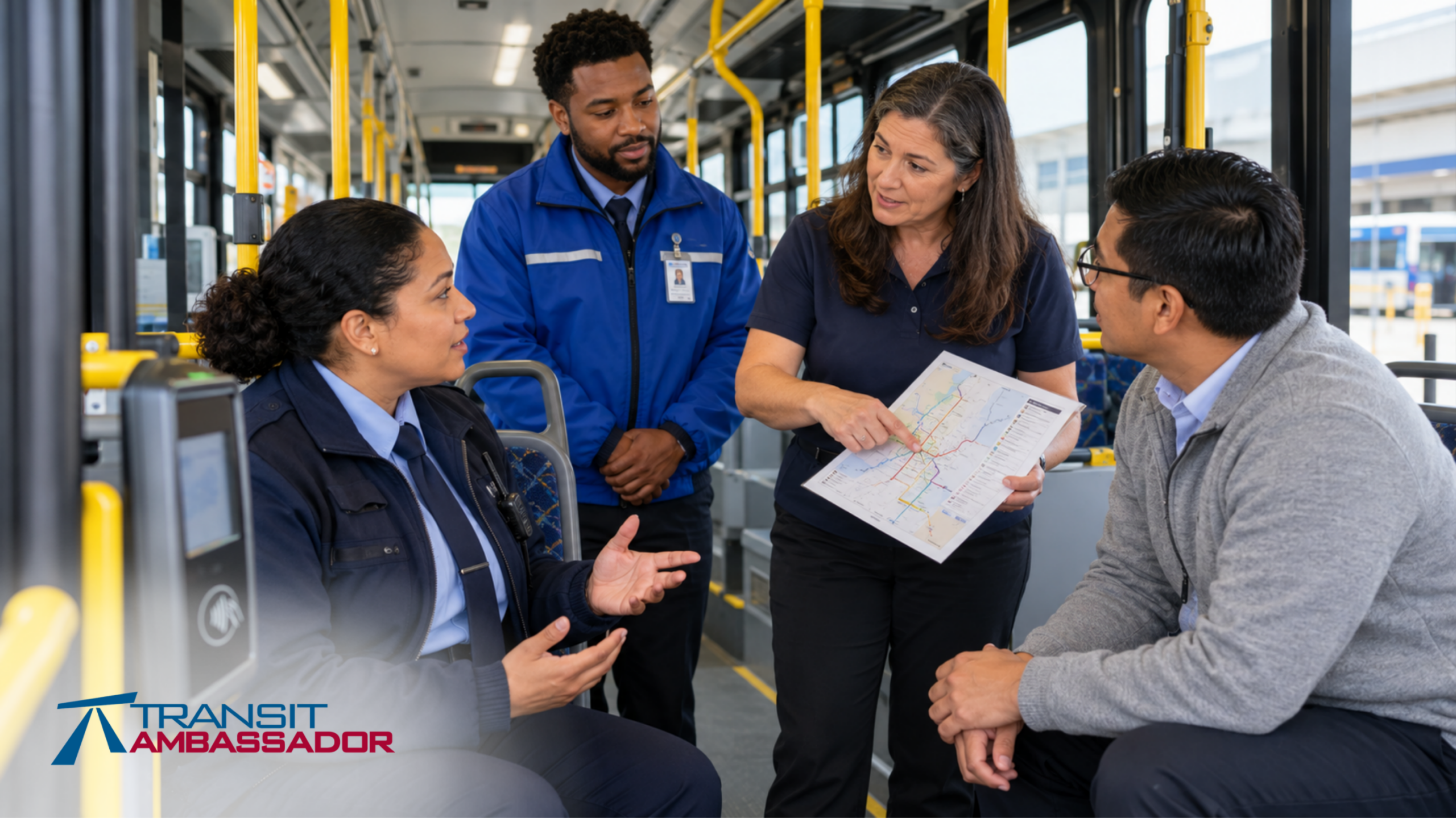
Generic customer service training is rarely enough for public transportation. Transit teams need examples that match their environment: fare confusion, missed connections, detours, accessibility questions, service delays, crowded events, rider frustration, and safety concerns. Scenario-based training helps teams practice what to say and what to do.
It also helps agencies identify where policies or communication materials need improvement. If employees struggle to explain a process clearly, riders may be struggling too.
For conflict-related training needs, the FTA De-Escalation Training Resource Directory provides resources to help agencies develop, implement, and update their training programs.
A strategic training program connects people, policy, and communication
Customer service training works best when it is tied to agency goals. If the agency wants to improve rider experience, reduce complaints, build trust, or support accessibility, training should reinforce those priorities. It should also connect with service alerts, ambassador programs, supervisor coaching, and feedback reporting.
The Transit Ambassador training programs include customer service training focused on communication, conflict resolution, and inclusive service techniques.
The goal is not to make every interaction perfect. The goal is to make support more consistent, professional, and easier for riders to understand.
What this means for transit agencies
For transit leaders, the takeaway is clear: rider experience, workforce support, communication, and public trust are connected. When agencies invest in practical frontline support, they are not only improving individual interactions. They are building a stronger foundation for service quality, agency reputation, and long-term confidence in public transportation.
For a broader workforce perspective, explore why Transit Ambassador training matters for building a stronger transit workforce.
FAQs
Why is customer service training important in transit?
It helps frontline teams communicate consistently, reduce rider frustration, support accessibility, and represent the agency professionally.
What should transit customer service training include?
It should include plain-language communication, role clarity, escalation protocols, accessibility awareness, complaint prevention, and realistic transit scenarios.
Who should receive customer service training?
Operators, ambassadors, station teams, supervisors, customer service representatives, and other public-facing staff can benefit from role-specific training.
Call to Action
Transit Ambassador helps agencies create a more consistent rider experience by connecting training, communication, and frontline support.
Visit www.transitambassador.org to explore training options, or contact the team to discuss your agency’s customer service priorities.