
Quick Answer
In 2026, transit workforce development should focus on recruiting, retaining, training, and supporting frontline employees in a more complex service environment. Agencies need strategies that address operator support, customer-facing stress, de-escalation, service changes, technology adoption, and career pathways.
Workforce Development Is Now a Service Strategy
When transit workforce development is discussed only in terms of hiring and training, it misses how workforce development also affects service reliability, rider experience, safety culture, customer communication, and the agency’s ability to adapt to change.
In 2026, agencies are operating in a landscape shaped by staffing pressure, technology shifts, changing rider expectations, safety concerns, and the need for stronger retention. Supporting the workforce is more than a recruitment function. It is another lever for improving overall transit system operations.
A comprehensive approach should connect workforce planning with broader transit training programs that help employees build the technical, operational, and customer-facing skills required across the system.
Agencies examining these pressures can also explore why workforce development remains a major challenge for U.S. transit agencies.
Retention Starts With Support
Recruitment is important, but agencies cannot hire their way out of every workforce challenge if employees do not feel supported once they are in the role.
Retention depends on:
- Training
- Communication
- Supervisor support
- Role clarity
- Workplace safety
- Employee morale
- Practical tools that help staff succeed in public-facing environments
Frontline workers often manage the emotional side of transit service. They interact with riders during delays, fare questions, complaints, confusion, and service changes.
Transit frontline work is often under-recognized for its demanding customer service responsibilities compared with similar roles in retail or hospitality. Workforce development strategies must account for that reality.
Investing in practical, transit-specific customer service training can give operators, supervisors, and frontline teams clearer communication frameworks and stronger tools for managing difficult rider interactions. Transit Ambassador’s customer service program is specifically designed around public transportation environments rather than generic hospitality scenarios.
Training Needs to Match Modern Transit Environments
Modern transit work requires more than technical knowledge. Employees may also need skills in:
- Customer communication
- Empathy and emotional intelligence
- Safety and situational awareness
- Accessibility
- Conflict management
- De-escalation
- Technology adoption
- Adaptability during operational change
Training programs should be role-specific and routinely reinforced over time to ensure transit staff keep pace with changing passenger needs, agency policies, and operational conditions.
Agencies should consider how operators, ambassadors, station teams, supervisors, dispatchers, and customer service teams each need different tools to succeed on the job. A one-size-fits-all approach may miss the practical pressures faced by different roles.
For example, a frontline operator may need language frameworks for managing fare disputes, while a supervisor may need coaching tools, incident-review processes, and clearer escalation protocols.
Transit-specific de-escalation training can help employees recognize warning signs, communicate effectively under pressure, assess risk, and disengage safely when necessary. The program is delivered through a train-the-trainer format and includes scenario-based learning tailored to transit operations.
Agencies planning a systemwide approach may also benefit from this guide to implementing de-escalation training across a transit organization.
Customer Service Programs Can Support Workforce Resilience
Transit customer service roles can be part of workforce development because they help distribute public-facing support.
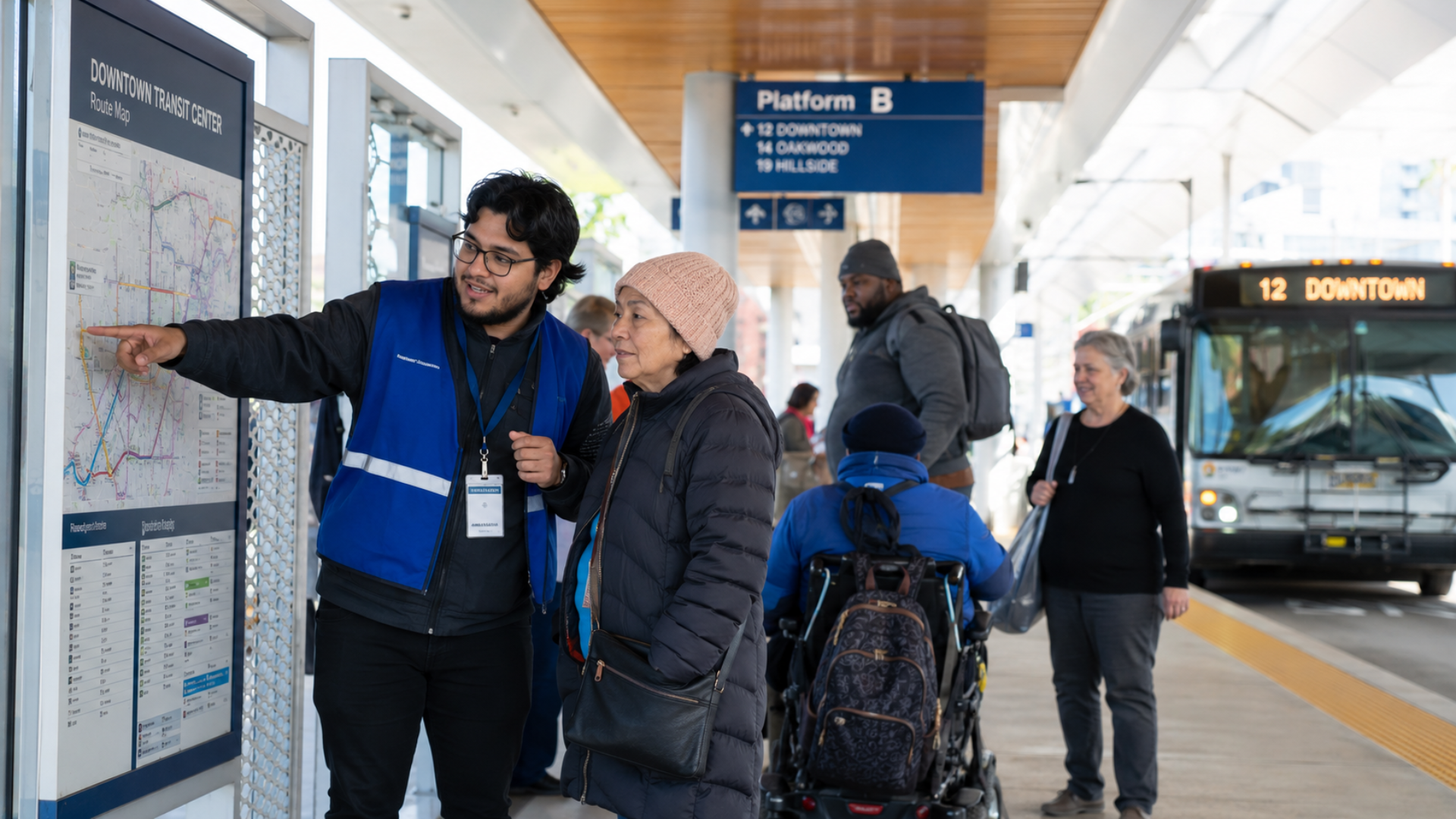
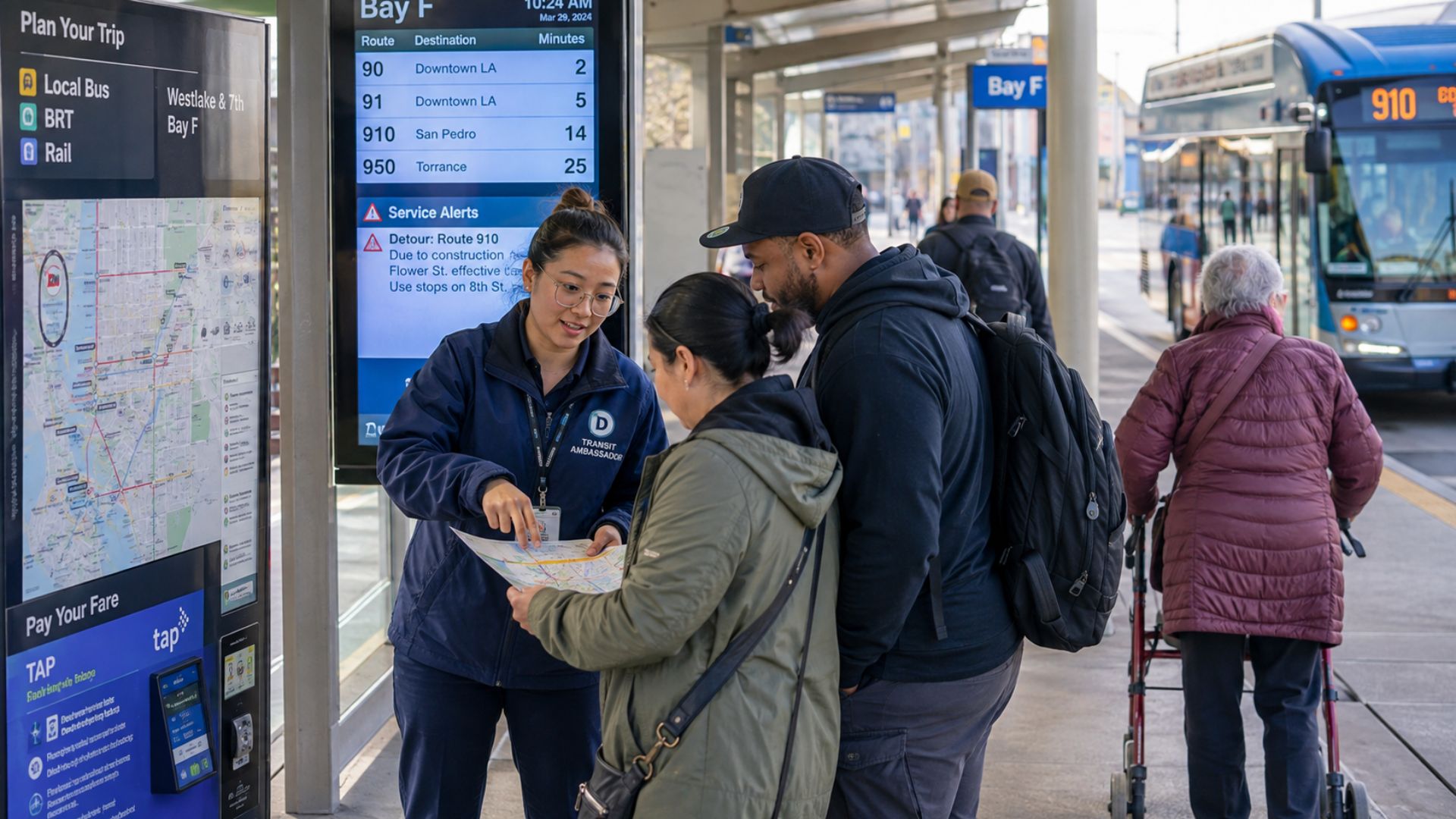
When transit staff answer rider questions, guide passengers during service changes, assist with wayfinding, and support communication in the field, they can reduce some of the pressure placed on operators and other frontline teams.
Customer service training can also improve workforce resilience by giving employees repeatable tools for navigating difficult conversations. This is especially important when employees are expected to remain calm and professional while managing complaints, confusion, accessibility needs, or service disruptions.
Agencies looking to reduce recurring rider issues can review how structured training, coaching, and frontline communication may help reduce customer complaints.
Customer service and ambassador roles can also create entry points for people interested in transit careers. With the right training and career pathways, these positions can introduce employees to:
- Public transportation operations
- Passenger communication
- Safety culture
- Accessibility practices
- Agency policies
- Frontline service expectations
- Career opportunities within transit
What Agencies Should Prioritize Next
Agencies should prioritize workforce strategies that connect recruitment, retention, training, employee support, and rider experience.
That may include:
- Evidence-based hiring and assessment tools
- Mentorship programs
- Frontline communication training
- Customer service coaching
- De-escalation refreshers
- Clear escalation pathways
- Ambassador deployment
- Supervisor ride-alongs
- Employee feedback loops
- Internal trainer development
- Career development pathways
- Cross-functional learning opportunities
The strongest workforce strategies recognize that people are the foundation of public transportation.
Vehicles, infrastructure, scheduling systems, and technology all matter, but trained and supported employees make the system work for riders every day.
What This Means for Transit Agencies
For transit leaders, the takeaway is clear: rider experience, workforce support, communication, safety, and public trust are connected.
When agencies invest in practical frontline support, they are not only improving individual interactions. They are building a stronger foundation for:
- Service quality
- Employee retention
- Safety culture
- Operational consistency
- Agency reputation
- Long-term confidence in public transportation
Workforce development should therefore be treated as an agency-wide strategy, not simply a human resources function or a collection of isolated training sessions.
How Transit Ambassador Can Help
Agencies should prioritize workforce strategies that connect recruitment, retention, training, and rider experience.
That may include evidence-based hiring tools such as STRADA to help identify candidates who are well suited for frontline roles, alongside ongoing professional development that equips employees to succeed after they are hired.
Transit Ambassador complements this approach by providing a train-the-trainer model that enables agencies to build internal training capacity.
Rather than relying solely on external instruction or one-time workshops, agencies can certify internal trainers to deliver consistent, practical training in:
- Customer service
- Communication
- Accessibility
- Conflict management
- De-escalation
- Rider assistance
The train-the-trainer approach allows agencies to adapt learning to local policies, rider needs, and operating environments while reinforcing the material over time. Transit Ambassador uses this model across its customer service and de-escalation programs to help agencies create more sustainable internal training systems.
This strengthens frontline teams, supports employee development, and helps create a more welcoming, resilient, and customer-focused transit system.
Agencies can also explore the broader relationship between customer experience, de-escalation, and workforce retention.
Build a Stronger Transit Workforce
A stronger transit workforce does not begin and end with recruitment. It requires practical training, employee support, clear expectations, career development, and systems that help frontline teams perform confidently.
Contact the Transit Ambassador team to discuss workforce training, STRADA, customer service, de-escalation, train-the-trainer delivery, pricing, and program customization.