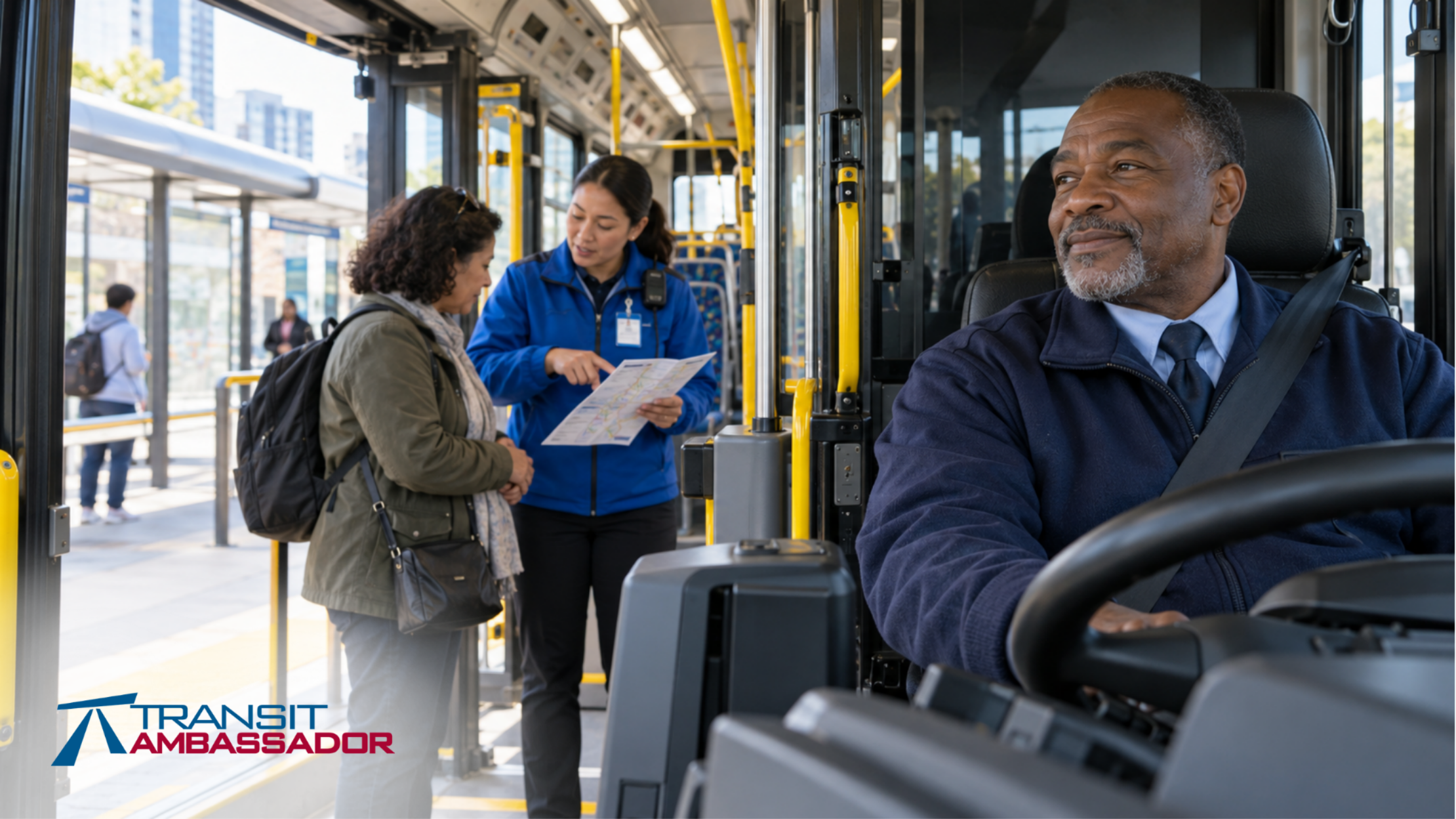
Concerns about violence, assault, homelessness, and substance abuse are prevalent at transit systems servicing major urban areas across North America. During the pandemic, a heightened awareness around transit safety emerged as social distancing protocols, disruptions, passenger conflicts, and increases in non-destination riders revealed that many systems were not prepared to deal with these types of safety risks. As a result, many transit agencies sought out de-escalation training to manage these safety risks and remain topical, post-pandemic. De-escalation skills used to defuse situations before they become dangerous have been increasingly positioned as an integral safety mitigation strategy that must be documented, standardized, and aligned with agency policy under the broader safety expectations shaping transit.
Unlike other customer service industries, transit employees need to manage the customer experience of a mobile work environment while being responsible for the safety of all employees and passengers on board. This was true prior to the pandemic, but there was a greater focus on upskilling the safety management skills of frontline staff at the peak of social disruptions during that time.
APTA’s 2025 recommended practice reframes de-escalation training as part of creating a safer work environment and reducing assaults on frontline personnel and between passengers. It explicitly connects training, policy alignment, and tools to PTASP expectations. Agencies are no longer being asked whether they offer de-escalation training, and instead, they are being asked how systematically they deploy it, document it, and reinforce it.
What is De-Escalation and why is it important in a Transit Environment?
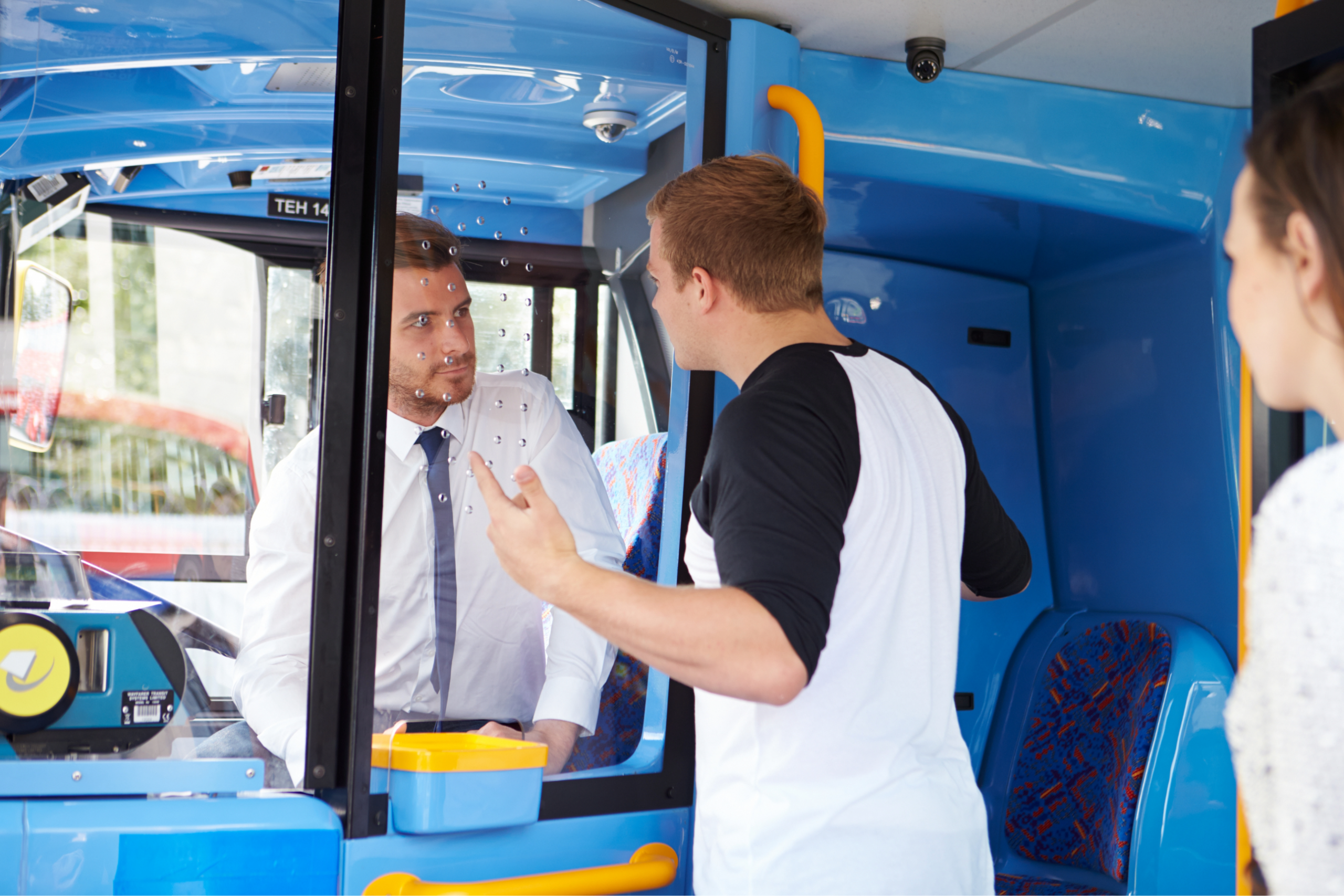
De-escalation in a customer service setting, like transit, refers to defusing or minimizing tense situations before they escalate into dangerous encounters. In transit specifically, de-escalation is about managing what happens when tensions rise due to customer complaints, fare disputes, inappropriate behaviour on transit, and passengers in crisis.
When tensions run high, staff need to be able to recognize escalation cues such as changes in tone, physical proximity, body language, crowd dynamics, and situational stressors that signal a potential incident. During an escalating situation, it becomes imperative to apply effective communication and active listening to minimize and defuse situations before they turn into a risk to staff, such as assault or abuse.
De-escalation skills require staff to remain calm and feel confident that they can apply rehearsed and repeatable language under stress, or know when to follow premeditated exit strategies. In the moment of escalation, no one invents perfect communication or solutions, but they can rely on what has been practiced through de-escalation training. Scripted techniques, consistent phrasing, and clearly defined boundaries reduce improvisation and increase confidence and calmness are examples of key techniques.
Understanding disengagement is equally important. Operators need clarity on when to step back, how to maintain safety without inflaming the situation, prioritizing their own safety over vigilantism, and how to execute a clean handoff to dispatch or security. Service continuity and personal safety are not competing goals and should be managed simultaneously.
When de-escalation is treated as a serious safety priority, it becomes an operational doctrine, and not just a one-off classroom exercise.
Why is 2026 a Turning Point for De-escalation Training?
APTA’s 2025 analysis of FTA General Directive 24-1 mitigation trends identifies de-escalation training as one of the most common mitigations that agencies are deploying in response to assault risk and safety management requirements.
This signals a clear trajectory for the industry’s safety standards.
De-escalation is being embedded regularly into safety risk mitigation documentation. It is appearing across safety committee agendas and being referenced in operator assault reduction strategies. De-escalation is now being audited for in post-incident investigations. As a result, training for de-escalation is increasingly being requested by transit agencies.
Agencies that continue to treat de-escalation as a one-time, standalone workshop will struggle to demonstrate alignment with safety management expectations. De-escalation training is not a one-time solution but requires ongoing practice, discipline, and re-training to stay on top of emerging risks and threats. Agencies that integrate a de-escalation training systemwide through policy, dispatch protocols, supervision, and reinforcement are proactive, resilient, and compliant with safety standards.
What a Systemwide Implementation of De-escalation Training Requires
A systemwide rollout of de-escalation training isn’t just scheduling a single class for all operators. In fact, that model often fails because it ignores how transit operations function day-to-day. De-escalation training isn’t a one-time solution but an ongoing effort that adapts to transit and community experiences.
De-escalation training requires organization-wide support because every position has a role to play in ensuring staff and passenger safety on transit, hence why training implementation can begin with a role-based training architecture.
Operators and frontline employees require practical skills, such as escalation recognition, language scripts and frameworks, dispatch interface protocols, and clearly defined “safe exit” rules. Supervisors and field operations staff need a different toolbox addressing how to coach behaviour, review incidents for consistency and lessons learned, and reinforce standards during ride-alongs and coaching sessions. Dispatch and control center staff require communication protocols that support operators and other front-line staff in real-time and ensure coordinated responses.
Coordinating training across organizational tiers helps standardize responses to transit conflicts, create consistency, and ensure safety is not a responsibility siloed within a single role or department.
Policy alignment is equally critical. If agency policy instructs operators to disengage under specific circumstances, training must provide the exact language and process for doing so. When policy and training are disconnected, staff are left to improvise, which creates risk and endangerment.
APTA’s guidance emphasizes this alignment: policy language, training methodology, and tools must reinforce one another. De-escalation cannot live in a binder separate from the training room.
Click here to explore Transit Ambassador’s Transit De-Escalation Program.