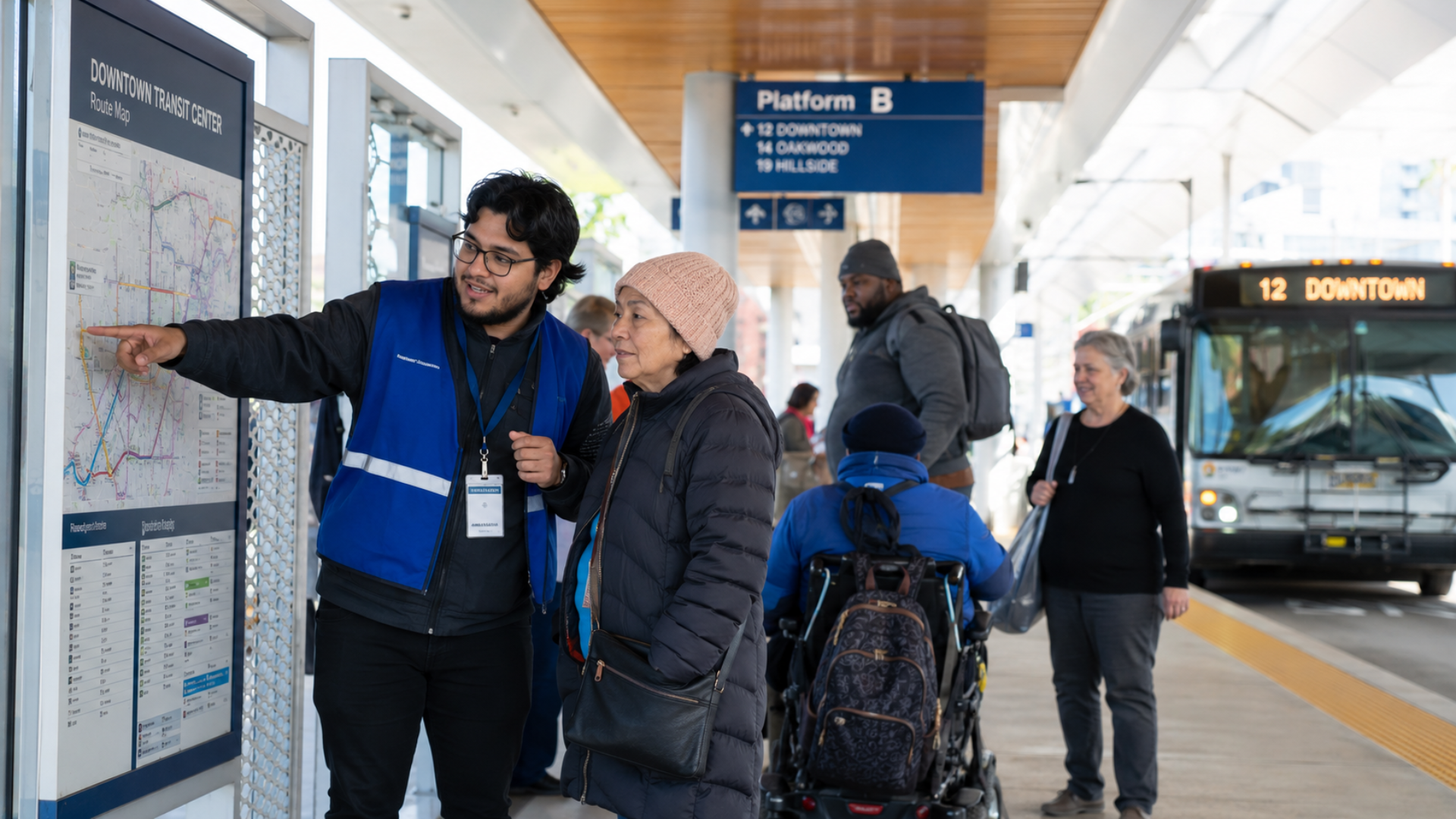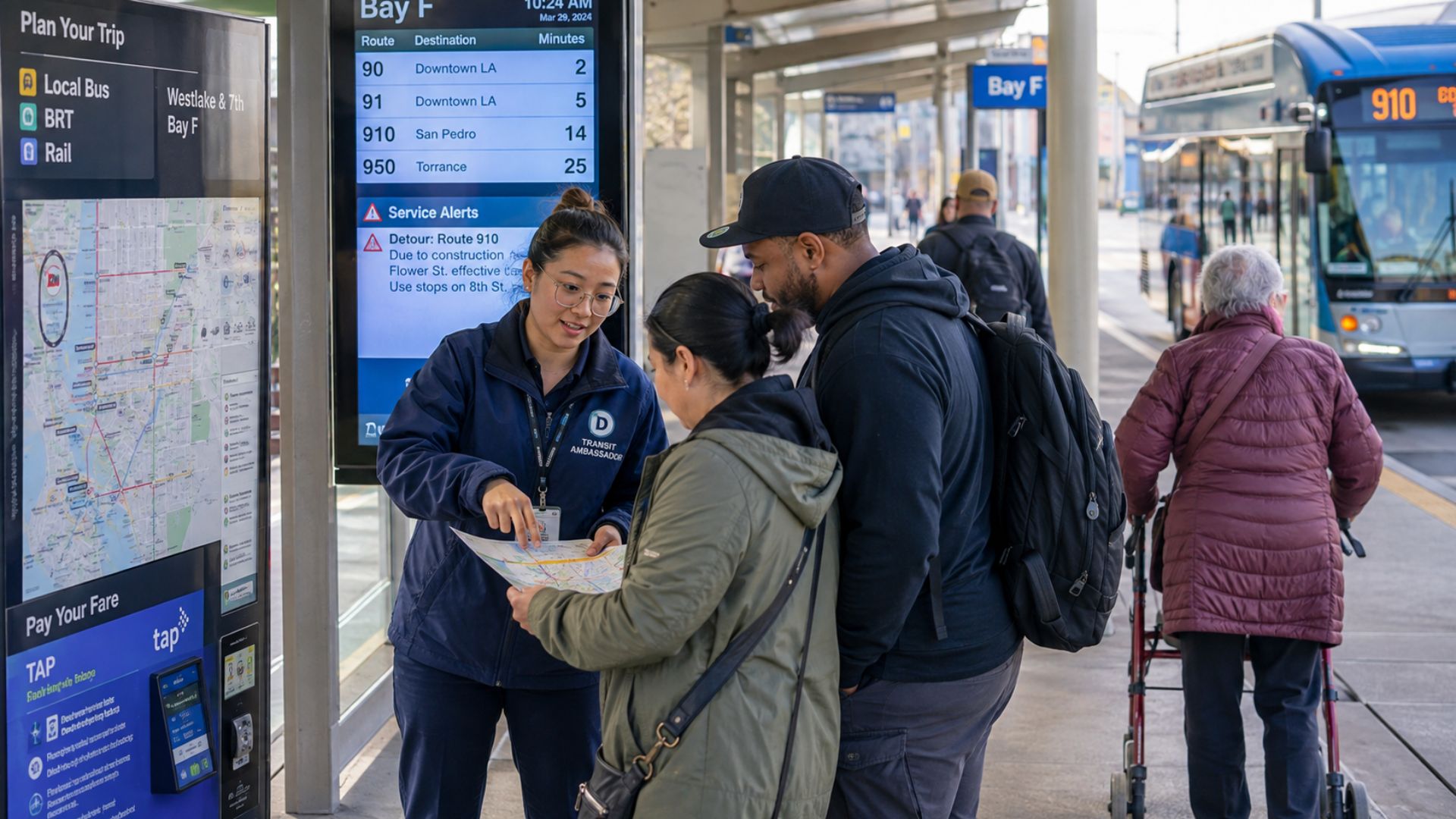
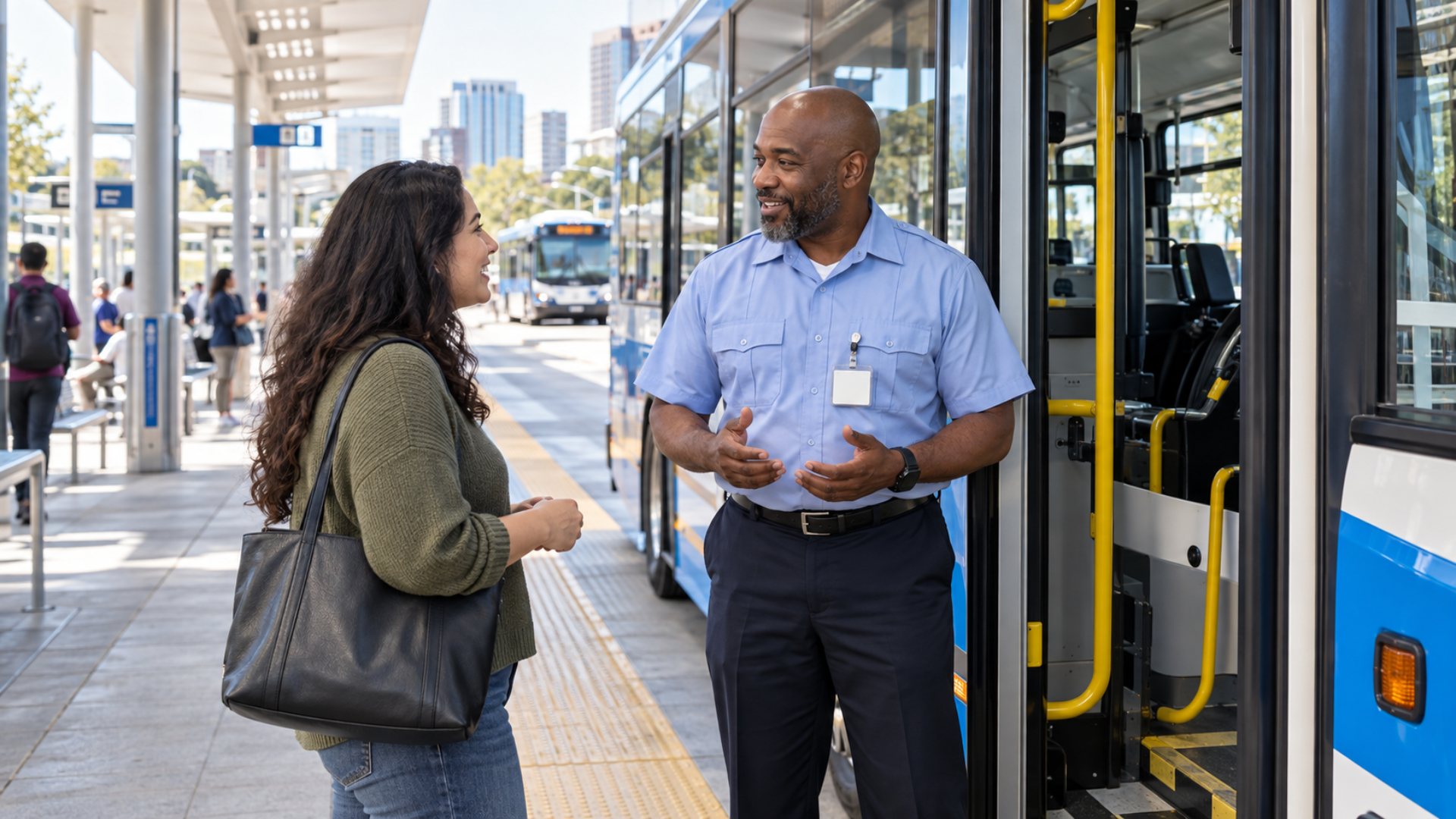
De-escalation training matters because transit operators and frontline teams regularly interact with riders during stressful, confusing, or high-emotion moments. Training helps employees recognize early warning signs, communicate calmly, set boundaries, and know when to escalate an issue to supervisors, safety teams, or security partners.
Transit conflict often begins with everyday friction
Many tense situations in transit do not begin as major incidents. They begin with fare disputes, missed connections, crowding, confusion, service disruptions, or frustration directed at the nearest employee. Frontline teams need practical tools for those moments because the first response can influence what happens next.
De-escalation training gives employees a shared approach for staying calm, communicating clearly, and reducing the chance that a tense interaction becomes more serious. The American Public Transportation Association’s recommended practice for transit de-escalation addresses training and policies for situations such as fare disputes and other confrontations.
Training creates consistency across teams
Without consistent training, different employees may respond to similar situations in very different ways. Some may over-explain, avoid engagement, and may unintentionally escalate through tone, body language, or unclear boundaries. A structured training program helps teams use common language and common decision points.
This consistency matters for agencies. It helps employees feel more prepared, supports supervisors in coaching teams, and gives riders a more predictable experience across the system.
De-escalation is part of a broader safety approach
The Federal Transit Administration’s De-Escalation Training Resource Directory describes training as one part of a broader safety management approach. APTA’s guidance also connects de-escalation training with agency policy. Together, these resources can help leaders consider how training fits alongside reporting processes, supervisor support, communication tools, and coordination with safety and security teams.
That means agencies should not treat de-escalation as a one-time training box to check. The concepts need to be reinforced through practice, refreshers, role-specific scenarios, and field support.
What de-escalation training should include
Strong training should cover how to recognize rising tension, use calm and respectful language, maintain personal safety, avoid unnecessary confrontation, set clear boundaries, offer choices when appropriate, and disengage or escalate when needed. It should also clarify what employees are not expected to handle alone.
For transit ambassadors, operators, station teams, and supervisors, scenario-based training is especially useful. Realistic examples help employees connect concepts to the actual situations they face. Transit Ambassador’s de-escalation course includes modules on early warning signs, verbal and nonverbal communication, risk assessment, and disengagement, followed by simulation and assessment.
Why support after training matters
Training is more effective when employees see that the agency’s systems support what they learned. If a worker is taught to escalate certain situations but the escalation pathway is unclear, the training loses value. If policies do not match field realities, employees may feel unsupported.
Agencies should connect training with operational procedures, reporting, supervisor coaching, and ambassador deployment. The goal is to create a culture where calm communication is supported by clear structure.
What this means for transit agencies
For transit leaders, the takeaway is clear: rider experience, workforce support, communication, and public trust are connected. When agencies invest in practical frontline support, they are improving individual interactions and building a stronger foundation for service quality, agency reputation, and long-term confidence in public transportation.
FAQs
What is de-escalation training in public transportation?
De-escalation training teaches transit employees how to recognize tension, communicate calmly, reduce conflict, maintain boundaries, and escalate issues appropriately.
Why is de-escalation training important for operators?
Operators often face rider frustration while responsible for safe service delivery. Training helps them respond more consistently and know when to involve additional support.
Should transit ambassadors receive de-escalation training?
Yes. Ambassadors who interact with riders should understand basic de-escalation, role boundaries, and escalation protocols so they can support riders without taking on responsibilities outside their role.
Transit Ambassador can support agencies with frontline strategies that connect customer communication, de-escalation awareness, and real-world rider support. Explore the de-escalation training program or contact the Transit Ambassador team to discuss your agency’s needs.