
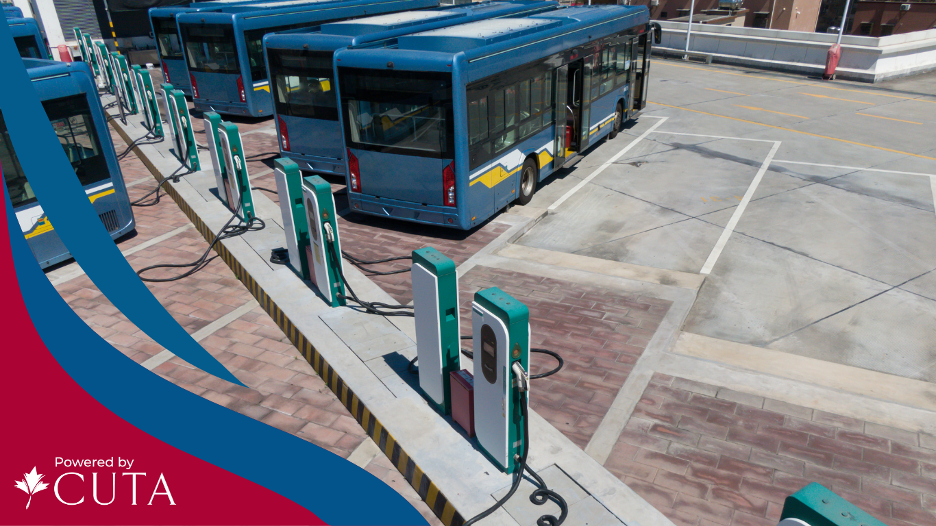
The Electric Transition Has Arrived — But Are Our People Ready?
Transit agencies across North America are embracing the shift to zero-emission fleets. Federal and state funding, from the FTA’s Low or No Emission Vehicle Program to EPA’s Clean School Bus grants, are accelerating the timeline for fleet electrification.
Yet the greatest challenge isn’t the technology itself. It’s the people who need to plan, operate, and maintain it.
From route planners to maintenance supervisors, every department is learning to adapt to a new operational reality. That’s why workforce development, not just capital investment, has become the defining factor of a successful zero-emission transition.
The Knowledge Gap: Where Agencies Are Struggling
While agencies are securing funds for electric buses, many report the same concerns:
- Limited internal expertise on charging infrastructure and grid coordination
- Uncertainty around scheduling and range management for BEBs (battery-electric buses)
- Gaps in cross-department collaboration between planning, fleet, and facilities teams
- Insufficient training resources that are transit-specific and immediately applicable
The Battery Electric Bus Implementation Program is designed to address exactly these gaps. Developed by industry experts, it offers hands-on, facilitated learning tailored to the realities of public transit, not generic sustainability courses.
From Pilots to Full Fleets: Why Training Must Evolve
In early pilot projects, agencies often relied on manufacturer-led instruction focused narrowly on vehicle operation or maintenance. But as fleets scale up, agencies need a holistic understanding of electric bus integration covering:
- Fleet Specification & Procurement – How to evaluate vehicle options, battery capacity, and performance metrics.
- Infrastructure Project Delivery – Coordinating depots, charging layouts, and utility partnerships.
- Scheduling & Service Planning for BEBs – Incorporating range limits, charging dwell times, and seasonal impacts into run-cutting.
The Battery Electric Bus Implementation Program addresses all three areas through live virtual instruction by connecting planners, engineers, and project managers in one learning environment.
A Cross-Functional Training Approach
Unlike traditional maintenance or planning courses, BEB training is inherently interdisciplinary.
A zero-emission transition succeeds when operations, facilities, and finance teams speak the same language.
The CUTA model brings those perspectives together through:
- Collaborative workshops using real-world data and scenarios
- Instructor-led sessions from active North American subject matter experts
- Peer-to-peer learning across agencies of different sizes and fleet maturities
This ensures participants not only learn the “how,” but understanding the interdependencies between route design, power infrastructure, and workforce capability.
Key Learning Outcomes for Agencies
Agencies that complete BEB implementation training report immediate benefits, including:
- Clearer project roadmaps and role assignments
- Reduced project delays linked to internal misalignment
- More confident engagement with utilities and OEMs
- Better risk assessment for fleet scaling and maintenance costs
Participants leave with a practical action plan, not just theory. Many agencies use these outputs to inform board updates or funding applications, demonstrating readiness for FTA and state-level zero-emission initiatives.
Linking Training to Sustainability & Equity Goals
The shift to electric fleets isn’t only about cleaner air. It’s also an opportunity to build equity, resilience, and good jobs in public transit.
Well-trained teams can make smarter choices about depot siting, service reliability, and community access. In turn, this supports federal policy goals for equitable decarbonization and workforce advancement under FTA’s Sustainable Transit for a Healthy Planet Challenge.
By investing in people alongside technology, agencies can ensure that the transition strengthens and does not strain their long-term service capacity.
Common Barriers (and How to Overcome Them)
- “We don’t have time for training.”
→ The BEB Implementation Program runs as two half-day virtual sessions, ideal for busy teams managing live projects. - “We’re not ready yet.”
→ The curriculum is designed for any stage of electrification, from feasibility studies to full deployment. - “We already did OEM training.”
→ Manufacturer sessions focus on vehicles; this course covers system-wide readiness, from route planning to infrastructure commissioning.
A Complement to Other Transit Skills Programs
The Battery Electric Bus Implementation Program works best as part of a holistic workforce development pathway. Agencies often pair it with:
- Transit Planning for Sustainable Communities — for integrating land use and sustainable mobility goals
- Transit Scheduling and Runcutting — to adapt service design for electric fleets
- Transit Ambassador Program — to prepare frontline staff for the customer-facing side of service change
Together, these programs build a complete training ecosystem that strengthens both technical and human capacity.
Case Example: From Planning to Performance
Several North American agencies that participated in BEB training reported immediate organizational benefits:
- Operational integration: Teams developed clearer communication channels between planning, maintenance, and finance.
- Data-driven decisions: Managers began tracking range and charging data to refine schedules dynamically.
- Faster implementation: Agencies moved from pilot to procurement phases with fewer delays.
These results underscore a key truth: the success of zero-emission transit depends as much on people as it does on batteries.
The Workforce Imperative
Transitioning to electric fleets represents the most significant operational shift in public transit in decades.
Without a workforce that understands how to plan, deliver, and sustain these systems, no amount of investment can ensure long-term success.
Agencies that commit to structured training now will be the ones setting industry standards tomorrow.
Actionable Takeaway
If your agency is planning, piloting, or scaling electric bus service, it’s time to invest in your people not just your vehicles.
Explore the Battery Electric Bus Implementation Program to equip your team with the technical, planning, and operational expertise needed for a successful zero-emission transition.