
Quick Answer
Transit agencies can improve communication during service disruptions by preparing plain-language messages, coordinating updates across channels, placing support at high-confusion points, and giving riders clear next-step guidance. Transit ambassadors help by translating service updates into real-time, human support where riders are most likely to need help.
Disruptions are trust moments
No transit agency can avoid every disruption. Weather, construction, staffing challenges, events, equipment issues, detours, and emergencies can all affect service. What riders remember is not only that a disruption happened. They remember how clearly the agency communicated and whether they could figure out what to do next.
That makes disruption communication one of the most important parts of rider experience. When communication is clear, timely, and visible, riders feel more informed. When it is hard to find or difficult to understand, frustration grows quickly.
Riders need next-step information
During a disruption, riders are usually asking practical questions: Is my route affected? Where should I board? How long will this take? What is my alternative? Who can help me if I need accessibility support? Generic updates are not enough if they do not help riders make decisions.
Agencies should focus on plain-language, action-oriented communication. The goal is not to describe the disruption internally. The goal is to tell riders what has changed and what they should do next.
The U.S. Department of Transportation’s Plain Language Checklist offers a practical reference for reviewing messages for clear organization, short sentences, active voice, and everyday language.
Frontline support closes the gap between notice and action
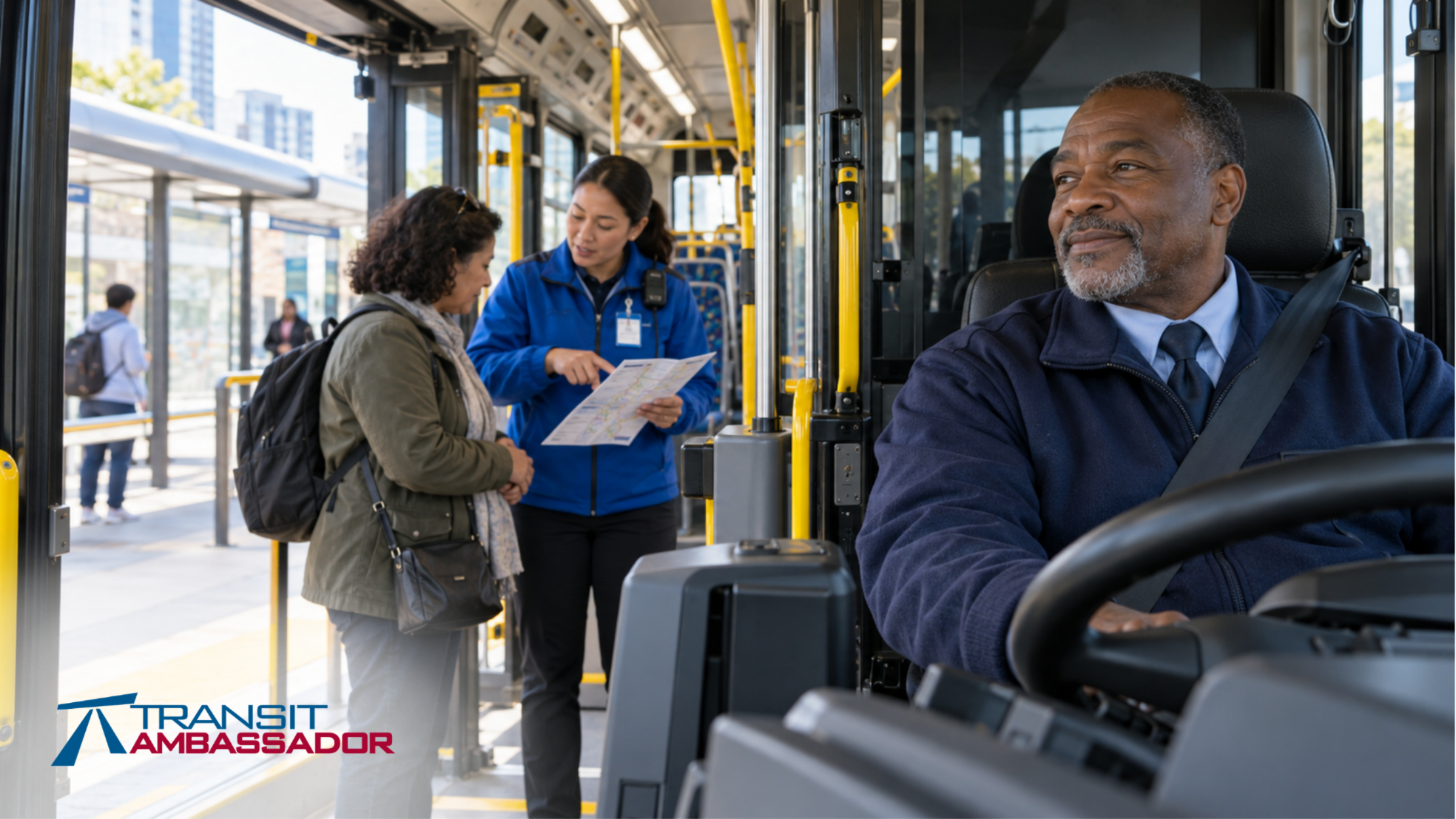
Digital alerts, websites, apps, signage, and social media are all important. But some riders still need in-person help, especially during confusing changes or high-volume service disruptions. Transit ambassadors can support riders at affected stops, stations, transfer points, and event locations.
Ambassadors can help explain detours, guide riders to temporary boarding areas, answer repeated questions, and identify where information is still unclear. This makes the communication strategy more complete.
This visible assistance is part of how transit ambassadors support safer, more welcoming transit systems.
Consistency matters across every channel
Disruption communication becomes harder when different channels say different things. Riders may see one message online, another at the stop, and hear another from a staff member. Inconsistent information damages trust.
Agencies can reduce this risk by preparing message templates, identifying approval processes, briefing frontline teams, and updating ambassadors before deployment. Even when details change, the tone and structure of communication should feel consistent.
For agencies reviewing their communication channels, the National RTAP guide to communicating with the public provides guidance on sharing rider information through multiple formats and considering accessibility needs.
How to plan before the disruption happens
Strong disruption communication starts before a disruption. Agencies can identify common disruption scenarios, create rider-friendly language, map high-confusion locations, plan ambassador deployment, and establish feedback loops. After each major disruption, teams should review what riders asked most often and where communication gaps appeared.
Preparing employees for these interactions is another part of readiness. Transit Ambassador training programs include customer service training focused on communication, conflict resolution, and inclusive service techniques.
This turns every disruption into a learning opportunity. Over time, agencies can make the system easier to navigate even when service is not operating normally.
What this means for transit agencies
For transit leaders, the takeaway is clear: rider experience, workforce support, communication, and public trust are connected. When agencies invest in practical frontline support, they are not only improving individual interactions. They are building a stronger foundation for service quality, agency reputation, and long-term confidence in public transportation.
Agencies facing repeated concerns about detours, boarding locations, or unclear updates can also explore how frontline support can help reduce transit customer complaints.
FAQs
What should transit agencies communicate during a disruption?
Agencies should communicate what changed, who is affected, where riders should go, what alternatives are available, and where to get help.
How can ambassadors help during service changes?
Ambassadors can provide in-person guidance, answer common questions, direct riders to temporary boarding areas, and share feedback about recurring confusion.
Why is plain language important in service alerts?
Plain language helps riders act quickly. During a disruption, riders need clear next steps, not technical or internal terminology.
Call to Action
Transit Ambassador helps agencies make service changes easier to understand by connecting clear messaging with trained frontline support.
Visit www.transitambassador.org to learn more, or contact the team to discuss your agency’s frontline communication and training needs.