Quick Answer
Frontline support improves accessibility and rider confidence by giving riders a visible person who can answer questions, explain options, assist with wayfinding, and help navigate service changes. For riders with disabilities, older adults, visitors, and anyone unfamiliar with the system, trained transit ambassadors can make public transportation feel easier to use.
Accessibility is experienced in real time
Accessibility is not only a policy or design standard. It is something riders experience moment by moment as they plan, board, transfer, ask for help, respond to changes, and complete their trips. Even when infrastructure is accessible, riders may still need clear information and human guidance to use the system confidently.
Frontline support helps bridge the gap between what the system offers and what the rider can easily understand in the moment.
Confidence grows when help is easy to find
Riders may hesitate to use public transportation if they are unsure where to go, how to transfer, whether an elevator is available, how to navigate a temporary boarding change, or who can help if something does not go as planned. That uncertainty can be a barrier.
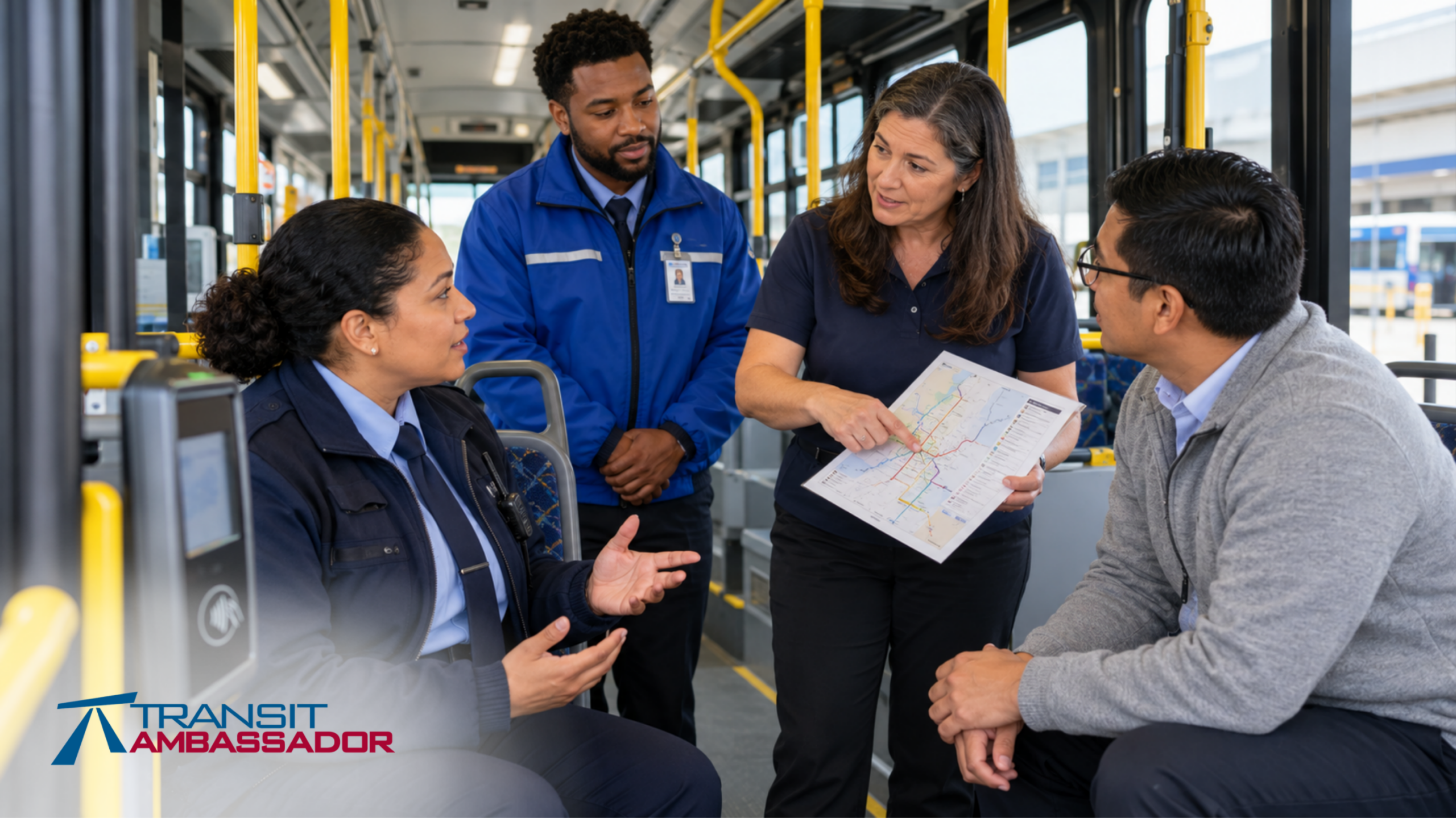
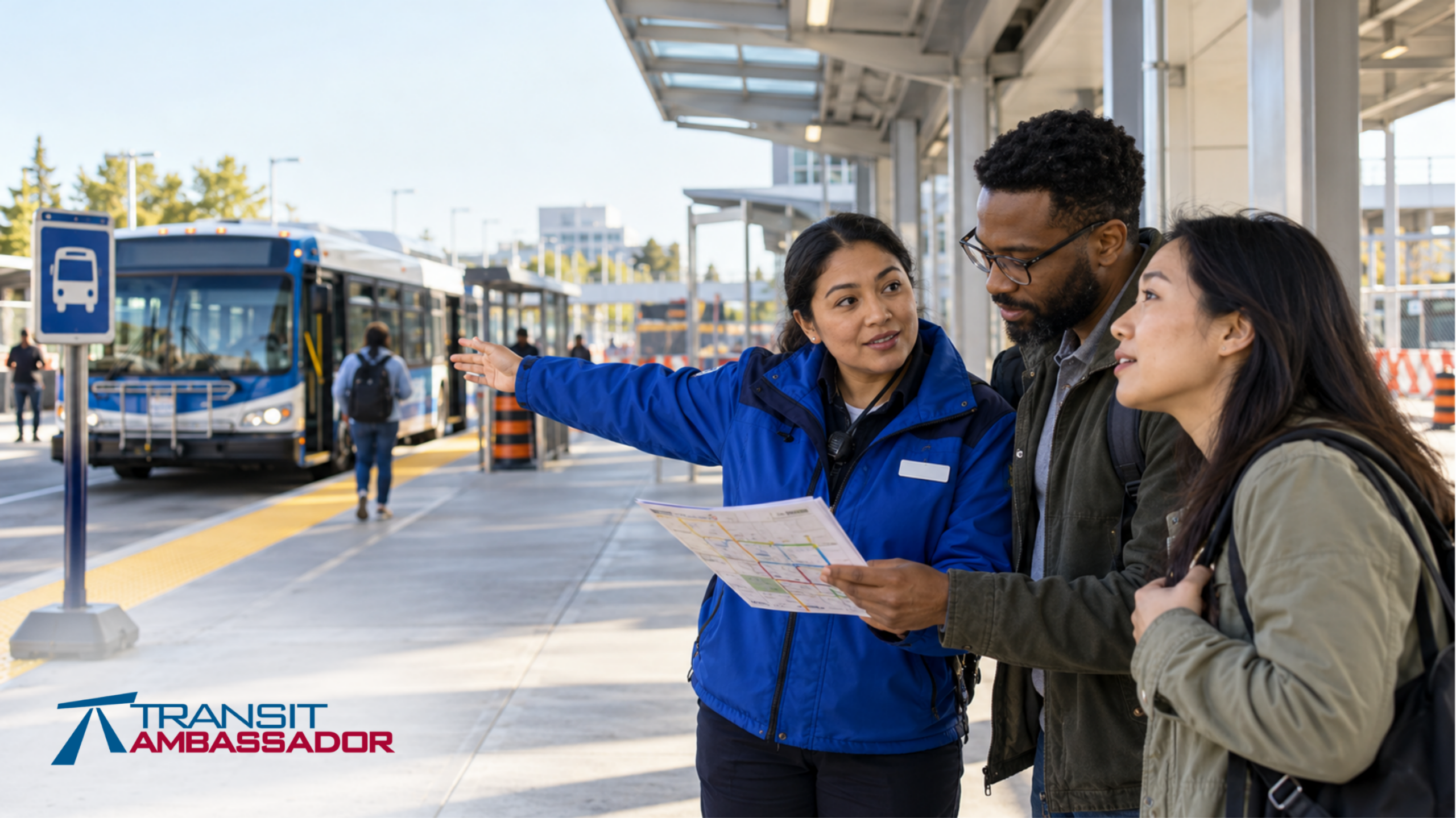
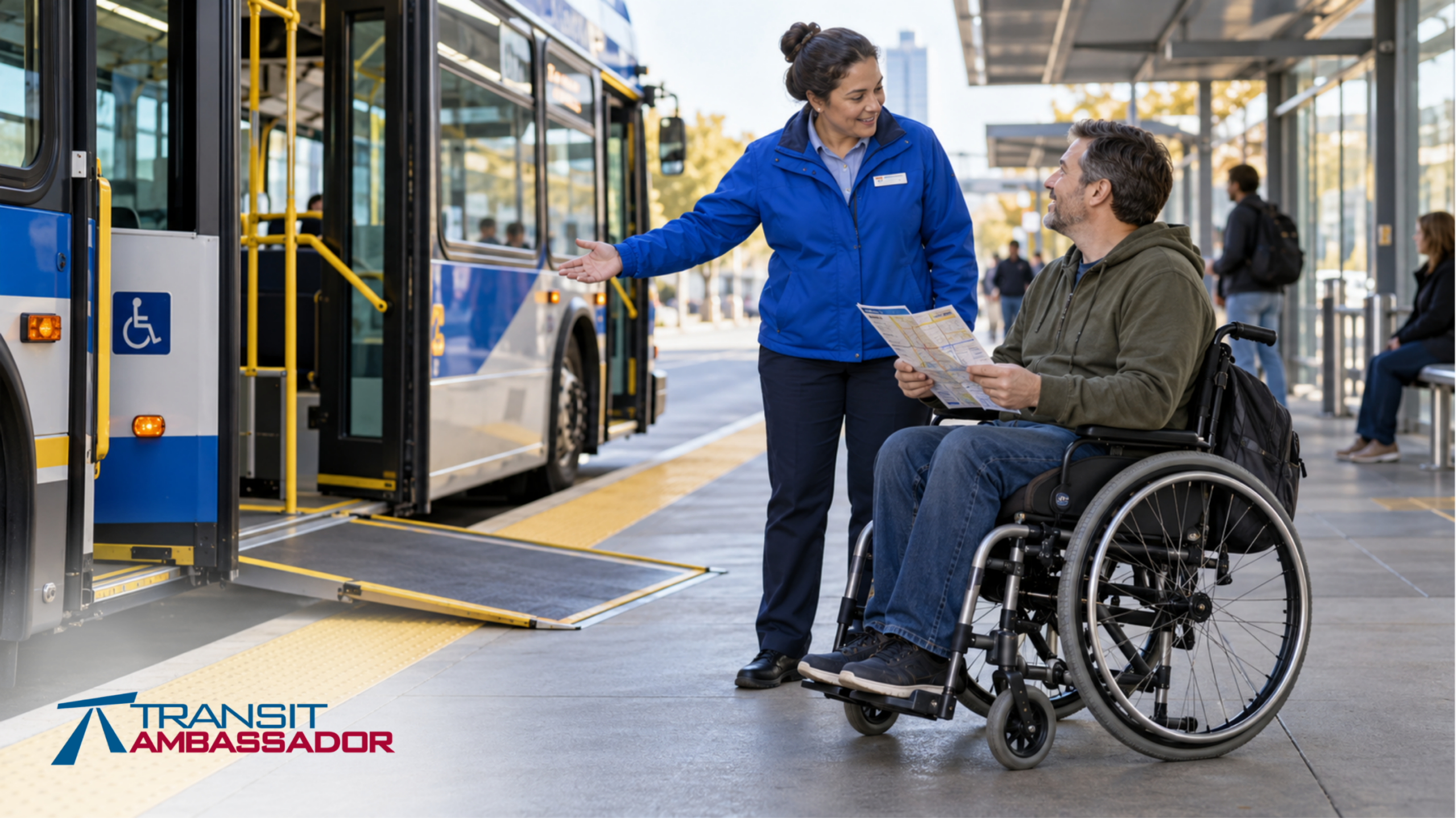
Transit ambassadors can provide visible support at key locations. They can answer basic questions, direct riders to accessible routes, explain temporary changes, and help riders feel less alone while navigating the system.
This visible assistance is part of how transit ambassadors support safer, more welcoming transit systems.
Accessible communication should be clear and practical
Accessibility depends heavily on communication. Riders need information that is understandable, consistent, and available across channels. During service changes or disruptions, communication becomes even more important because riders may have fewer options or need more time to adjust.
Ambassadors can reinforce agency communication in plain language and identify when signage or alerts are not answering the questions riders are asking. That feedback can help agencies improve future communication.
The National RTAP guide to communicating with the public provides practical guidance on rider information, communication channels, and accessibility considerations.
Frontline support benefits more than one rider group
Accessibility support often benefits many types of riders. Older adults, people with disabilities, caregivers, visitors, riders with limited English proficiency, first-time users, students, and people traveling during stressful events may all need help understanding the system. A well-trained ambassador program can support a wide range of needs without making riders feel singled out.
The result is a system that feels easier to use for more people.
How agencies can strengthen accessibility through ambassador programs
Agencies should train ambassadors on accessibility basics, respectful communication, wayfinding, service change procedures, and escalation pathways. They should also coordinate ambassadors with accessibility teams, customer service, operations, and supervisors so information remains accurate.
The [Transit Ambassador training programs](https://transitambassador.org/transit-training