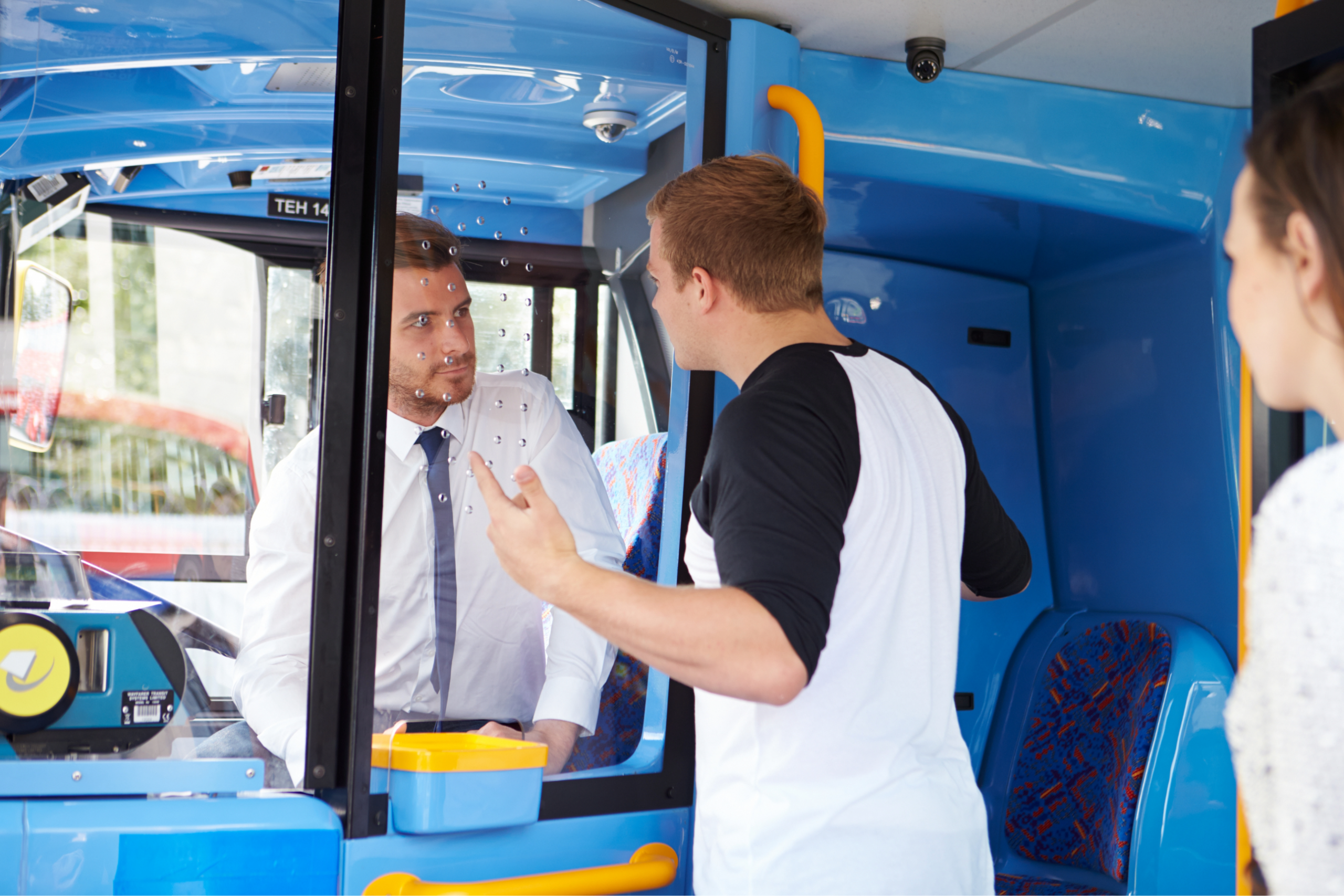

A New Urgency for Transit Customer Service Excellence
Every transit leader knows the challenge: passenger expectations are rising, frontline staff are under pressure, and public trust depends on the quality of every single rider interaction.
Across North America, transit agencies are facing an inflection point. Operators and supervisors are managing more than just schedules — they’re managing people. Whether it’s a fare dispute, a service delay, or a frustrated commuter, one poorly handled exchange can ripple through the entire system.
That’s why many agencies are investing in industry-specific customer service and de-escalation training, programs that go far beyond generic hospitality content and speak directly to the realities of public transit.

Why Transit-Specific Training Matters
Traditional customer service courses miss the mark because they don’t address the unique dynamics of the transit environment such as mobile workplaces, safety-sensitive roles, and unpredictable public interactions.
The Transit Ambassador Program was developed precisely to fill that gap. Created by and for transit professionals, the program uses a train-the-trainer model that empowers agencies to build internal capacity, sustain culture change, and deliver consistent service standards over time.
Agencies that implement this approach report measurable improvements:
- Reduced customer complaints and faster resolution of service disputes
- Higher commendation rates from riders
- Improved staff confidence and morale in managing tense situations
- Greater team alignment between operators, dispatch, and management
Case in point: Metra, the Chicago commuter rail system, saw a notable reduction in passenger complaints and a measurable rise in staff satisfaction after adopting the Transit Ambassador framework.

The Real ROI: Building a Sustainable Customer Service Culture
Customer service in transit isn’t just about “smiling more.” It’s about emotional intelligence, situational awareness, and clear communication under pressure.
A sustainable training program should:
- Equip trainers internally — so agencies aren’t reliant on one-time sessions.
- Use scenario-based learning, not theory — giving staff realistic practice handling conflict, fare disputes, or accessibility needs.
- Reinforce accountability — by linking customer experience metrics (complaints, commendations, on-time feedback) to ongoing staff development.
- Create a shared language — helping operators, inspectors, and supervisors approach difficult situations with consistent responses.
These outcomes are what make the train-the-trainer approach central to the Transit Ambassador Program. Once certified, internal trainers deliver the curriculum themselves, adapting real-life agency examples, scheduling sessions flexibly, and embedding customer service culture over time.

De-escalation: The Skill Every Transit Professional Needs
Riders may not remember whether a bus was two minutes late, but they’ll always remember how they were treated. That’s why de-escalation has become one of the most requested training modules among U.S. agencies.
Key principles covered in the Transit Ambassador curriculum include:
- Recognizing the early signs of agitation or conflict
- Using verbal and non-verbal techniques to defuse tension
- Managing one’s own emotional triggers under stress
- Maintaining safety and professionalism in volatile situations
This approach doesn’t just protect passengers, it protects staff. Operators report feeling more confident and less stressed, knowing they have proven tools to manage difficult situations.
In an era where operator burnout and turnover are costly challenges, that’s a competitive advantage for any agency.

Why the Train-the-Trainer Model Works for Transit
Unlike one-off workshops, a train-the-trainer model builds organizational muscle memory. Here’s why transit systems from Chicago to Calgary rely on it:
| Benefit | Impact |
| Local Ownership | Trainers understand local routes, riders, and policies |
| Cost Efficiency | One investment, ongoing internal delivery |
| Cultural Consistency | Shared standards across divisions |
| Staff Engagement | Peer-led training fosters buy-in and pride |
This model also aligns with agency workforce goals under FTA’s Section 5314(b) initiatives on workforce development by positioning participating agencies as proactive leaders in employee training and retention.

The Link Between Training and Workforce Retention
Customer service training isn’t just a public relations initiative — it’s a retention strategy.
When frontline employees feel supported and equipped to handle difficult situations, their job satisfaction increases. Agencies that invest in interpersonal skills training report lower absenteeism, higher morale, and a stronger sense of purpose among operators and supervisors.
The result: better rider experiences and a more resilient workforce.
If your agency is also struggling with recruitment and retention, explore how STRADA – the operator recruitment and assessment tool can help identify candidates who are predisposed to succeed in customer-facing roles.

Integrating Customer Experience Into Agency Strategy
Forward-thinking transit systems are now embedding customer experience into every level of operations — from route design to operator onboarding.
To sustain that shift, agencies should:
- Include customer service and de-escalation in performance metrics
- Develop internal customer experience champions among supervisors
- Refresh training content regularly to reflect real-world incidents
- Showcase success stories internally and publicly to build momentum
The Transit Ambassador Program is structured to support exactly that — providing not just course content, but a culture-change toolkit for agencies ready to lead by example.
Next Steps
Customer service excellence is no longer optional in transit — it’s foundational to public trust, employee retention, and system success.
If your agency is ready to elevate frontline performance and rebuild rider confidence, start with a proven foundation.
Learn how the Transit Ambassador Program can help your agency reduce complaints, strengthen staff engagement, and create a customer-first culture that lasts.