Customer complaints are patterned, predictable, and often preventable.
Across North America, transit agencies consistently see complaints cluster around the same pressure points: poor customer service, missed connections, service disruptions, accessibility challenges, and safety concerns.
While many agencies respond with one-time customer service training, the reality is that complaints rarely decrease in a meaningful or sustained way. The issue is not a lack of effort but a lack of scalability and reinforcement.
If improving rider experience in a measurable way is a goal for you in 2026 then read on!
Why Complaint Reduction Efforts Often Fall Short
Most transit agencies have already invested in some form of customer service training like “soft skills” development and sensitivity and awareness training. Yet complaints persist. Why?
Because one-time training alone does not change behavior, but coaching does!
Common failure points include:
- Training programs that are owned by HR but disconnected from frontline operations or aren’t transit specific
- Inconsistent messaging across divisions, garages, or departments
- New hires receiving different standards than experienced employees
- Supervisors lacking a shared definition of what “good service” looks like in practice
The result is fragmentation. Even strong training content loses impact or collapses when it isn’t reinforced consistently in the field. Many one-time training solutions will have an immediate injection of learnings but quickly collapse or fade away once trainers exit the site and staff turnover brings in untrained staff.
Industry insights highlight that agencies often address these challenges in piecemeal ways: internal programs, vendor workshops, or one-off seminars.
What’s missing is a structured, repeatable system that connects complaints → behaviors → coaching → measurable outcomes.
From Complaints to Coaching: A Practical System
Reducing complaints is about proactively preventing them through consistent frontline behavior.
Below is a scalable framework agencies can implement without creating additional bureaucracy.
Step 1: Translate Complaints into Teachable Behaviors
Too often, complaints are tracked but not operationalized.
Instead of viewing complaints as isolated incidents, agencies should classify them into behavior categories such as:
- Communication clarity
(customer service, announcements, explaining delays)
- Conflict management
(fare disputes, rule enforcement, riders in crisis, safety incidents)
- Accessibility interactions
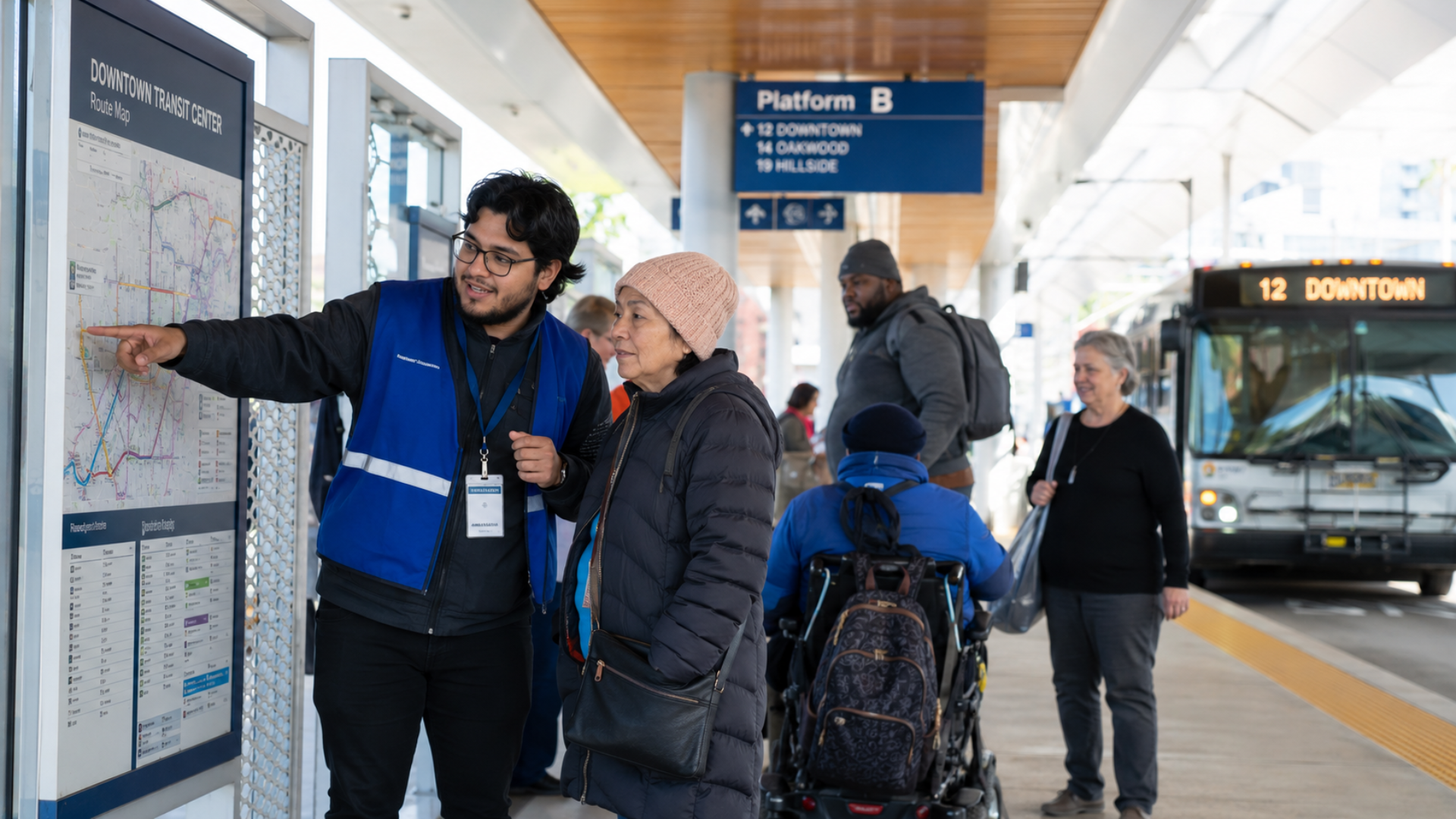
(priority seating, mobility device securement, time sensitivity, disability awareness)
- Service disruption response
(detours, missed transfers, unexpected delays, cancelled service)
Step 2: Define a Simple, Standard Interaction Model
Frontline staff need clarity and consistency when addressing customer complaints and feedback.
Agencies should define a small set (3–5) effective customer communication strategies. For example:
- Acknowledge the customer
- Clearly explain the situation
- Offer options where possible to make right a wrong
- Close the interaction respectfully
This creates a consistent approach that supervisors can coach, observe, and reinforce consistently.
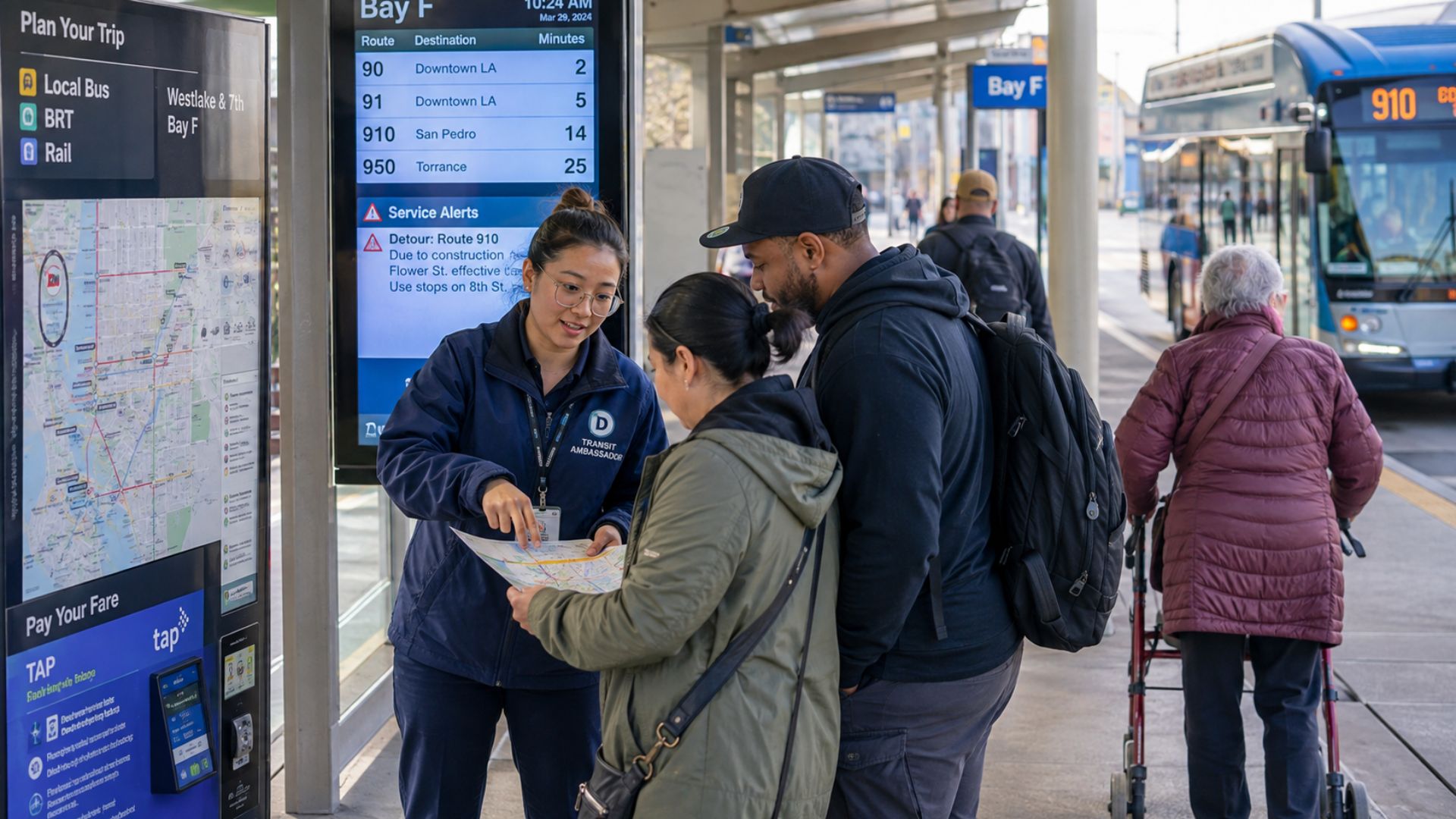
Transit-specific programs, such as Transit Ambassador’s Customer Service Program, are designed around this principle: equipping frontline staff with practical frameworks and strategies tailored to real-world transit scenarios rather than generic customer service theory.
Step 3: Train the People Who Train and Coach
This is where train-the-trainer programs succeed where one-time training programs fail and where the biggest opportunity exists.
Employee behaviors can’t change from a single training session alone. They improve when:
- Supervisors reinforce expectations
- Instructors model the behaviors
- Trainers coach consistently in real-world situations
A train-the-trainer model, like Transit Ambassador’s Customer Service Program, ensures that:
- Knowledge is retained internally
- Training scales across large or distributed teams
- Standards remain consistent despite turnover
Programs like Transit Ambassador focus on developing internal customer service training leaders who can deliver training and reinforce behaviors across the organization.
This approach transforms customer service training from an event into an organizational culture.
Step 4: Embed Reinforcement into Daily Operations
The difference between good training and real results is reinforcement.
High-performing agencies integrate customer service coaching into everyday workflows:
- Pre-pullout briefings (5 minutes):
Reinforce one key behavior tied to recent complaint trends
- Supervisor ride checks:
Focus on observing and coaching a single behavior at a time
- Post-incident debriefs:
Use a consistent rubric to review what went well and what could improve
These micro-interventions are simple, but they create a culture of customer service over time.
Step 5: Measure What Matters
Executives need measurable outcomes to benchmark return on training investments.
Agencies implementing structured, coachable systems have reported:
- Reductions in customer complaints
- Increases in customer commendations
- Improved frontline employee confidence and satisfaction
- Reduction in safety incidents
For example, agencies like Metra have demonstrated how structured training and reinforcement can translate into tangible service improvements.
The key is aligning metrics with behaviors and not just tracking complaints but tracking how consistently desired behaviors are being applied.
Customer complaints are a symptom of an operational gap. Agencies that treat customer feedback and complaints as opportunities to improve will not only reduce complaints but build stronger, more confident frontline teams.
If your goal is to create a consistent, scalable approach to customer service then it may be time to rethink how training is delivered and sustained.
Learn more about how Transit Ambassador Customer Service Training program can help you meet and elevate your customer service standards to empower your staff and improve transit passenger experience.